

3 Pepper Jelly Seafood Recipes: Shrimp, Crab Cakes & Salmon
Seafood and pepper jelly work surprisingly well together because seafood gives you a mild, savory base while pepper jelly brings sweetness, acidity, fruit and chile flavor.
In the Jones family, seafood has always been a natural place to experiment with Pepper Jam. Caribbean Mango works beautifully with shrimp, Jalapeño can brighten crab cakes, and Pomegranate adds a glossy fruit-forward finish to salmon.
These three recipes take those combinations in different directions without making the pepper jelly overpower the seafood.
3 Pepper Jelly Seafood Recipes at a Glance
| Recipe | Grandma Jones Flavor | Flavor Direction |
|---|---|---|
| Grilled Shrimp Skewers | Caribbean Mango | Tropical, citrusy and lightly sweet-spicy |
| Crab Cakes | Jalapeño | Fresh chile flavor with rich crab |
| Glazed Salmon | Pomegranate | Fruity, savory and glossy |
1. Caribbean Mango Pepper Jelly Grilled Shrimp Skewers
Shrimp and Caribbean Mango Pepper Jelly are one of the easiest seafood combinations in the Grandma Jones lineup.
The shrimp brings natural sweetness of its own, while mango, lime and pepper add contrast without covering up the seafood.
Instead of marinating the shrimp in pepper jelly and then reusing that marinade, this method seasons the shrimp first and applies a clean pepper jelly glaze near the end of grilling.
That gives you better food safety and reduces the chance that the sugary glaze will burn.
Serves 4
Ingredients
- 1 pound large shrimp, peeled and deveined
- 1 tablespoon olive oil
- 1/2 teaspoon smoked paprika
- 1/4 teaspoon garlic powder
- Salt and black pepper to taste
- 1/4 cup Grandma Jones Caribbean Mango Pepper Jelly
- 1 tablespoon fresh lime juice
- 1 teaspoon soy sauce
- Optional pinch of cayenne
- Fresh cilantro or parsley for garnish
- Wooden or metal skewers
Directions
- If using wooden skewers, soak them in water for about 30 minutes before grilling.
- Pat the shrimp dry.
- Toss the shrimp with olive oil, smoked paprika, garlic powder, salt and black pepper.
- Thread the shrimp onto the skewers.
- In a separate clean bowl, stir together the Caribbean Mango Pepper Jelly, lime juice, soy sauce and optional cayenne.
- Preheat the grill to medium-high heat.
- Grill the shrimp for approximately 2 minutes on the first side.
- Turn the skewers and brush the cooked side lightly with the pepper jelly glaze.
- Continue grilling for approximately 1–2 more minutes, brushing lightly again if desired.
- Remove the shrimp when they are firm, pearly and opaque and have reached 145°F.
- Garnish with cilantro or parsley and serve immediately.
Why Caribbean Mango Works With Shrimp
This pairing works because neither ingredient has to fight for attention.
You get:
- Sweetness from mango and shrimp
- Acidity from lime
- Pepper flavor from the jelly
- Light char from the grill
- Saltiness from the soy sauce
If you want more heat, Habanero or Cranberry Habanero can move the same basic idea in a much hotter direction.
2. Jalapeño Pepper Jelly Crab Cakes
Crab cakes are rich enough to handle a little sweet heat, but the crab should still be the star.
That's why the pepper jelly stays mostly in the finishing sauce rather than being mixed heavily into the crab-cake mixture.
Makes approximately 8 small crab cakes
For the Crab Cakes
- 1 pound lump crab meat, checked carefully for shell or cartilage
- 1/4 cup mayonnaise
- 1 large egg, lightly beaten
- 1 tablespoon Dijon mustard
- 1 teaspoon Worcestershire sauce
- 1 teaspoon Old Bay seasoning
- 2 green onions, finely sliced
- 2 tablespoons finely diced red bell pepper
- 2 tablespoons chopped fresh parsley
- 1/3 cup panko breadcrumbs, plus more if needed
- 1/4 teaspoon cayenne, optional
- Salt and black pepper to taste
- 2 tablespoons neutral cooking oil
For the Jalapeño Pepper Jelly Sauce
- 1/4 cup Grandma Jones Jalapeño Pepper Jelly
- 1 tablespoon fresh lime juice
- 1 teaspoon Dijon mustard
- 1 teaspoon soy sauce
- Optional dash of hot sauce
Directions
- Place the crab meat in a large bowl and gently check it for any remaining shell or cartilage.
- In a separate bowl, whisk together the mayonnaise, egg, Dijon mustard, Worcestershire sauce and Old Bay.
- Add the green onions, bell pepper, parsley, panko and optional cayenne.
- Fold the mixture gently into the crab meat, taking care not to break up the larger pieces unnecessarily.
- Form into approximately 8 small crab cakes.
- Refrigerate the formed cakes for about 20–30 minutes if time allows. This helps them hold together during cooking.
- Meanwhile, combine the Jalapeño Pepper Jelly, lime juice, Dijon and soy sauce in a small saucepan.
- Warm over low heat until smooth. Add a dash of hot sauce if you want more heat.
- Heat the oil in a large skillet over medium heat.
- Cook the crab cakes for approximately 3–4 minutes per side, until golden brown and hot through the center.
- Transfer to a plate or wire rack.
- Serve with the warm Jalapeño Pepper Jelly sauce drizzled lightly over the top or on the side for dipping.
Don't Drown the Crab Cakes
This is one place where less pepper jelly is better.
Crab has a delicate flavor. A small amount of sauce gives you contrast without turning the entire dish into pepper jelly with crab underneath it.
Start with a teaspoon or two of sauce per crab cake and add more only if you want it.
3. Pomegranate Pepper Jelly Glazed Salmon
Salmon is richer and more assertive than shrimp or crab, which makes it especially well suited to a sweet-and-savory glaze.
Pomegranate Pepper Jelly adds fruit and acidity while soy sauce, ginger and garlic keep the glaze firmly on the savory side.
The original recipe included both pepper jelly and a fairly generous amount of honey. We don't think the extra sweetness is necessary.
The pepper jelly already does that job.
Serves 4
Ingredients
- 4 salmon fillets, about 5–6 ounces each
- Salt and black pepper to taste
- 1/4 cup Grandma Jones Pomegranate Pepper Jelly
- 1 tablespoon soy sauce
- 1 tablespoon fresh lime juice
- 1 teaspoon grated fresh ginger
- 1 clove garlic, finely minced
- 1 teaspoon sriracha or other hot sauce, optional
- 1 teaspoon olive oil
- Fresh cilantro or sliced green onion for garnish, optional
- Lime wedges for serving
Directions
- Preheat the oven to 400°F.
- Line a baking sheet with parchment paper or lightly oil an oven-safe baking dish.
- Pat the salmon dry and season lightly with salt and black pepper.
- Place the fillets skin-side down on the prepared pan.
- In a small saucepan, combine the Pomegranate Pepper Jelly, soy sauce, lime juice, ginger, garlic, optional sriracha and olive oil.
- Warm over low heat just until the jelly melts and the glaze becomes smooth.
- Reserve a small clean portion for serving if desired.
- Bake the salmon for approximately 7–9 minutes before glazing, depending on thickness.
- Brush the top of each fillet with a thin layer of pepper jelly glaze.
- Return the salmon to the oven and continue cooking for approximately 3–5 minutes, or until the salmon reaches 145°F in the thickest portion.
- For additional caramelization, broil briefly at the end while watching closely. The sugar in the jelly can burn quickly.
- Garnish with cilantro or green onion and serve with lime wedges.
Why Add the Glaze Near the End?
Pepper jelly contains sugar.
That sugar gives seafood a beautiful glossy finish, but it can also scorch if it stays under high heat for too long.
Cooking the salmon most of the way first and glazing near the end gives you better control over:
- Browning
- Texture
- Sweetness
- Burning
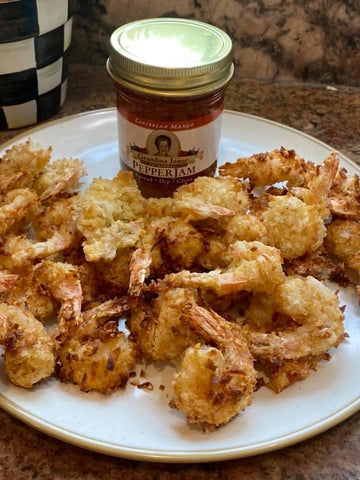
Why Pepper Jelly Works With Seafood
Seafood and pepper jelly sound like an unusual pairing until you break down the flavors.
Pepper jelly can contribute:
- Sweetness to contrast salt and char
- Acidity to brighten richer seafood
- Fruit that works especially well with shrimp and salmon
- Chile heat without requiring a heavy hot sauce
- A glossy texture that makes it useful as a finishing glaze
Seafood provides the savory foundation.
The trick is using enough pepper jelly to complement the fish or shellfish without hiding it.
Which Grandma Jones Pepper Jelly Goes Best With Seafood?
| Flavor | Tasting Category | Try It With |
|---|---|---|
| Traditional | Mild | Salmon, shrimp, crab cakes |
| Caribbean Mango | Mild | Shrimp, white fish, salmon |
| Southwestern Chipotle | Medium | Fish tacos, grilled salmon, shrimp |
| Habanero | Hot | Shrimp, salmon, fried seafood |
| Cranberry Habanero | Hot | Salmon and richer fish |
| Cranberry | Mild | Salmon and baked fish |
| Pomegranate | Mild | Salmon, tuna and roasted fish |
| Jalapeño | Medium | Crab cakes, shrimp, fish tacos |
Grandma Jones' mild, medium and hot descriptions are practical tasting categories rather than laboratory-measured Scoville ratings for the finished pepper jelly.
5 Tips for Cooking Seafood With Pepper Jelly
1. Glaze Late
Sugar burns quickly. Add pepper jelly primarily toward the end of grilling, roasting or broiling.
2. Keep Raw Seafood and Serving Sauce Separate
If a sauce or marinade touches raw seafood, don't use that same portion as a finishing or serving sauce unless it has been properly cooked.
The easiest approach is to reserve a clean portion before any contact with raw seafood.
3. Start With Less
Seafood can be delicate. A thin glaze or small spoonful of sauce is usually better than covering the entire dish.
4. Add Citrus
Lemon or lime can help keep a sweet pepper jelly sauce from tasting heavy.
5. Match the Jelly to the Seafood
Fruit-forward jellies work particularly well with shrimp and salmon. Smoky Chipotle can handle grilled seafood. Jalapeño works naturally with crab cakes and fish tacos.
Seafood Safety Basics
Keep seafood refrigerated until you're ready to cook it.
FDA recommends cooking most seafood to an internal temperature of 145°F.
For shrimp, look for flesh that is firm, pearly and opaque.
For fish such as salmon, use a thermometer in the thickest part when practical.
And always keep utensils, plates and sauces that have touched raw seafood separate from cooked food.
Frequently Asked Questions
Is pepper jelly good with shrimp?
Yes. Shrimp works particularly well with Caribbean Mango, Jalapeño and Habanero Pepper Jelly. Lime juice helps balance the sweetness and keeps the pairing fresh.
What pepper jelly is best with salmon?
Pomegranate is especially good with salmon because its fruit-forward flavor complements the richness of the fish. Cranberry, Cranberry Habanero, Traditional and Southwestern Chipotle can also work.
Can you use pepper jelly on crab cakes?
Yes. Serve a small amount of Jalapeño Pepper Jelly sauce alongside crab cakes rather than overwhelming the crab with a heavy coating.
Can pepper jelly be used as a seafood marinade?
It can be part of a marinade, but pepper jelly is often even better as a late-stage glaze because its sugar can burn over prolonged high heat. If marinade touches raw seafood, don't reuse it as an uncooked serving sauce.
When should I glaze seafood with pepper jelly?
Usually during the final few minutes of cooking. That gives the jelly time to melt, cling and caramelize without spending so long over high heat that the sugar scorches.
What temperature should seafood reach?
Most seafood should reach an internal temperature of 145°F. Shrimp should be firm, pearly and opaque when cooked.
Can I make these seafood recipes less spicy?
Yes. Use one of Grandma Jones' milder flavors such as Traditional, Caribbean Mango, Cranberry or Pomegranate and leave out additional cayenne, sriracha or hot sauce.
The Bottom Line
Pepper jelly can do much more with seafood than simply sit on the side of the plate.
Caribbean Mango becomes a bright finishing glaze for grilled shrimp. Jalapeño makes a sweet-spicy sauce for crab cakes. Pomegranate creates a glossy glaze that stands up beautifully to rich salmon.
The key is restraint: keep the seafood at the center of the dish, add the pepper jelly primarily toward the end of cooking, and keep clean serving sauce separate from anything that touches raw seafood.
For more ideas, visit our Pepper Jelly Seafood Recipes and Pepper Jelly Seafood Pairings.