

Best Pepper Jelly Brands: How to Choose the Right One
The best pepper jelly brand depends on what you actually want from the jar. Some people want a classic red pepper jelly with mild sweet heat. Others want jalapeño, smoky chipotle, fruit-forward flavors, or enough habanero heat to make the pepper an unmistakable part of the experience.
There are also meaningful differences between brands in flavor selection, heat levels, family history, specialty varieties, jar sizes, and how the jelly is intended to be used.
We should acknowledge something right up front: we make Grandma Jones' Pepper Jelly, so we're obviously not an independent review site. We think Grandma's recipe is pretty special.
But we've also been making, selling, cooking with, and talking about pepper jelly since the late 1990s. So rather than pretending there's one objectively “best” jar for every person, this guide explains what to look for, compares several established pepper jelly brands, and helps you figure out what type is best for you.
Best Pepper Jelly Brands at a Glance
| Brand | What Stands Out | Examples of Pepper Flavors | Worth Considering If You Want... |
|---|---|---|---|
| Grandma Jones' Pepper Jelly | Family recipe, eight-flavor lineup, wide range of heat and fruit profiles | Traditional, Jalapeño, Southwestern Chipotle, Habanero, Caribbean Mango, Cranberry, Cranberry Habanero, Pomegranate | One brand with mild, smoky, fruity and genuinely hot choices |
| Stonewall Kitchen | Established gourmet-food brand with several classic pepper-jelly styles | Red Pepper, Hot Pepper, Apple Jalapeño and seasonal varieties | A widely distributed gourmet-style pepper jelly |
| Braswell's | Long-running Southern specialty-food producer with classic and fruit-pepper varieties | Red Pepper, Jalapeño, Green Pepper, Pineapple Jalapeño, Meyer Lemon Blood Orange Pepper Jelly | Traditional Southern-style pepper jelly choices |
| Terrapin Ridge Farms | Very broad collection of creative jams, preserves and pepper combinations | Red Pepper, Mango Habanero, Hot Pepper Raspberry, Jalapeño Hatch Chile and others | Unusual sweet-savory flavor combinations |
| Nashville Jam Company | Small-batch Southern jam company with pepper-forward varieties | 3 Pepper Jelly, 6 Pepper Jelly, Peach Habanero, Strawberry Jalapeño | Artisanal pepper jellies and spicy fruit jams |
Product selections change over time, so always check the individual producer if you're looking for a specific flavor.
What Makes a Good Pepper Jelly?
A good pepper jelly shouldn't simply taste like sweet jelly with heat added to it.
The better versions balance several things:
- Pepper flavor — you should actually be able to taste the peppers.
- Sweetness — enough to create the classic jelly character without completely burying the savory side.
- Acidity — usually from vinegar, which provides tang and keeps the flavor lively.
- Heat — appropriate to the peppers and style of jelly.
- Texture — spreadable enough for crackers while still useful for glazing and cooking.
- Versatility — a good jar should give you more than one reason to open it.
Exactly where those elements should land is personal.
Someone shopping for an easy cream-cheese appetizer may want something completely different from someone looking for a habanero glaze for grilled pork.

1. Start With the Heat Level
When people hear the word “pepper,” their first question is often:
How hot is it?
That's important, but pepper jelly covers an enormous spectrum.
A sweet pepper jelly can have very little chile heat. Jalapeño gives you a more obvious kick. Chipotle adds smoke as well as heat. Habanero takes things much further.
At Grandma Jones, we've found it useful to think about our lineup in three broad tasting groups:
- Milder: Traditional, Caribbean Mango, Cranberry and Pomegranate
- Medium: Jalapeño and Southwestern Chipotle
- Hot: Habanero and Cranberry Habanero
Those are practical tasting categories rather than laboratory Scoville ratings for the finished jelly.
If heat is your biggest concern, see our Pepper Jelly Heat Guide.
2. Decide Whether You Want Classic Pepper Flavor or Fruit
“Pepper jelly” no longer describes one flavor.
A traditional red pepper jelly tends to emphasize sweet pepper flavor, vinegar tang, sugar and some level of spice.
Fruit changes the experience dramatically.
For example:
- Mango can make the jelly taste tropical and particularly useful with seafood or chicken.
- Cranberry brings tartness that works especially well with holiday foods.
- Pomegranate introduces a distinctly fruit-forward sweet-tart character.
- Peach can work naturally with hotter peppers such as habanero.
- Raspberry creates another sweet-tart counterpoint to chile heat.
If you're buying your first jar and aren't sure what you want, a classic red or Traditional-style pepper jelly is usually the easiest introduction to the category.
3. Look at the Type of Pepper, Not Just the Word “Hot”
Two pepper jellies can have similar perceived heat and taste completely different.
That's because peppers contribute flavor as well as capsaicin.
| Pepper Style | Typical Character | Good With |
|---|---|---|
| Sweet/Bell Pepper | Mild, fresh, sweet pepper flavor | Cream cheese, Brie, crackers, sandwiches |
| Jalapeño | Bright, green chile character | Cheddar, burgers, breakfast foods, chicken |
| Chipotle | Smoky, earthy, savory | Pork, beef, BBQ, smoked cheese |
| Habanero | Hot, fruity and floral | Chicken, pork, seafood, stronger cheeses |
Our Best Peppers for Pepper Jelly Guide goes much deeper into the differences.
4. Look for a Brand With Enough Variety to Match How You Eat
This has always mattered in the Jones family because we don't treat pepper jelly as a once-a-year appetizer.
We use it throughout the day.
We'll put it on toast or work it into breakfast. We'll spread it on sandwiches at lunch. We'll use it as a glaze for meats and vegetables, mix it into sauces, and occasionally even take it into desserts.
That's one reason Grandma Jones eventually grew beyond a single flavor.
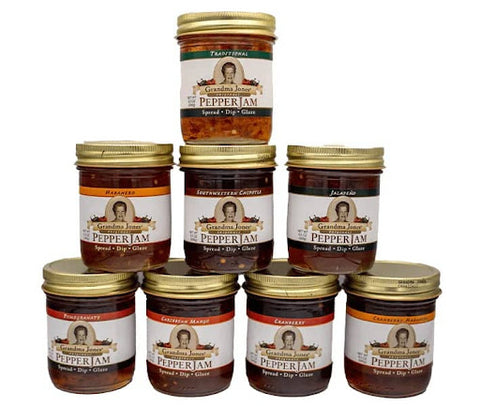
Our current lineup includes:
- Traditional
- Jalapeño
- Southwestern Chipotle
- Habanero
- Caribbean Mango
- Cranberry
- Cranberry Habanero
- Pomegranate
If you aren't sure where to begin, use our Find Your Flavor guide.
5. Consider What You're Actually Going to Do With It
One of the easiest ways to choose a pepper jelly is to work backward from the food.
| If You Want To... | Look For... |
|---|---|
| Serve cream cheese and crackers | Classic red or Traditional pepper jelly |
| Build a cheese board | Traditional, fruit-forward or moderate-heat jelly |
| Glaze pork | Chipotle, jalapeño, cranberry or fruit-and-pepper varieties |
| Serve with seafood | Mango, pomegranate or another fruit-forward pepper jelly |
| Make BBQ sauce | Traditional, chipotle or hotter pepper jelly |
| Add real heat | Habanero-based pepper jelly |
| Give it as a gift | A variety pack with multiple heat levels |
Our 101 Ways to Use Pepper Jelly can help if you want ideas before choosing a jar.
6. Pay Attention to the Brand Story
This isn't necessary for everyone.
If all you care about is what's in the jar, that's perfectly reasonable.
But specialty foods often have stories behind them, and for us that matters.
Grandma Jones' Pepper Jelly wasn't created because somebody ran a market analysis and decided pepper jelly was a good product category.
It started with Marcia Jones—Grandma Jones—making Pepper Jam for family and friends in Forty Fort, Pennsylvania.
Her grandsons Rick and Kris Jones eventually turned that family recipe into a commercial product in the late 1990s. Pepperjam.com was taking online orders by 1999, and in 2001 Grandma Jones' Pepper Jam reached a national television audience on QVC.
The business came after the family recipe.
That's still a meaningful part of why we make it.
You can read the complete story in our History of Pepper Jelly & Grandma Jones.
How Several Established Pepper Jelly Brands Differ
If you're comparing brands online, these are several names you're likely to encounter. We're including ourselves because this is our website, but we're not pretending the other companies don't make legitimate products.
Grandma Jones' Pepper Jelly
Our biggest distinction is the combination of family history and flavor range.
Grandma's original Pepper Jam eventually grew into eight varieties, allowing someone who dislikes heat and someone who loves habanero to shop within the same product family.
The lineup also moves well beyond heat alone. Southwestern Chipotle emphasizes smoke. Caribbean Mango goes fruit-forward and tropical. Cranberry Habanero combines tart fruit with much more serious spice.
If variety is important to you, you can compare all eight Grandma Jones flavors here.
Stonewall Kitchen
Stonewall Kitchen is a large specialty-food brand with deep roots in jams, jellies and gourmet pantry products.
Its current pepper-jelly offerings include classic styles such as Red Pepper Jelly and Hot Pepper Jelly, along with varieties such as Apple Jalapeño and seasonal pepper-fruit combinations.
It's particularly recognizable for the traditional gourmet-food-store interpretation of pepper jelly.
Braswell's
Braswell's has a long history in Southern specialty foods and currently offers several pepper-jelly styles.
Its lineup includes Red Pepper Jelly, Jalapeño Pepper Jelly, Green Pepper Jelly, Pineapple Jalapeño, and other specialty varieties.
For someone looking specifically for the traditional Southern red-pepper-jelly style, Braswell's is one of the established names you'll frequently encounter.
Terrapin Ridge Farms
Terrapin Ridge takes a broader, more experimental approach to the category.
Its jams and jellies include Red Pepper Jelly as well as combinations such as Mango Habanero, Hot Pepper Raspberry, Hot Pepper Peach, and Jalapeño Hatch Chile.
This is a useful brand to know if creative sweet-savory combinations are more important to you than staying strictly within classic pepper jelly.
Nashville Jam Company
Nashville Jam Company grew from a family garden and farmers-market business into a broader specialty-food company.
Its current spicy lineup includes 3 Pepper Jelly, 6 Pepper Jelly, Peach Habanero Jam, and Strawberry Jalapeño Jam.
The products lean heavily into the small-batch Southern jam tradition.
So, Which Pepper Jelly Brand Is Best?
There isn't one answer that works for everybody.
If you want a classic red pepper jelly, focus on companies with strong Traditional or Red Pepper varieties.
If you want heat, look at the actual pepper being used—not simply whether the label says “hot.”
If you want to cook with pepper jelly regularly, flavor variety becomes much more valuable.
If you're buying a gift, a multi-flavor assortment may make more sense than choosing a single jar for someone else's palate.
And if family history and buying from a long-running family brand matter to you, that's another legitimate factor.
We obviously believe Grandma Jones deserves to be part of that conversation. But we'd rather tell you why than simply declare ourselves the winner.
Which Grandma Jones Flavor Should You Try First?
If you're new to the brand, here's the easiest way to narrow it down:
| You Like... | Start With... |
|---|---|
| Classic pepper jelly | Traditional |
| Tropical sweet heat | Caribbean Mango |
| Smoky savory flavor | Southwestern Chipotle |
| Fruit plus serious heat | Cranberry Habanero |
| Not sure | Use Find Your Flavor |
What Is the Best Pepper Jelly for Cream Cheese?
A classic red or Traditional pepper jelly is the safest place to begin.
Cream cheese is mild and rich, so it works particularly well with the sweetness, acidity and pepper flavor of a traditional-style jelly.
Once you know you like the combination, fruit varieties and hotter jellies can take it in completely different directions.
See our Pepper Jelly Cheese & Cracker Pairing Guide for specific combinations.
What Is the Best Hot Pepper Jelly?
“Best hot pepper jelly” depends heavily on how much heat you actually enjoy.
Jalapeño-based jelly is often a good step up from classic red pepper jelly. Habanero-based varieties can produce considerably more heat.
At Grandma Jones, our hottest group is Habanero and Cranberry Habanero.
We recommend choosing heat based on how you normally eat spicy food rather than buying the hottest jar simply because it sounds exciting.
What Is the Best Pepper Jelly for Cooking?
The most useful pepper jelly for cooking is one whose flavor complements the dish.
- Traditional: extremely flexible for glazes, sauces and appetizers
- Chipotle: particularly useful with pork, beef and BBQ
- Mango: excellent with chicken and seafood
- Cranberry: natural fit with turkey, pork and holiday foods
- Habanero: useful when the heat itself should be noticeable
For a practical example, try our Jones Family Pepper Jelly BBQ Sauce.
Frequently Asked Questions
What should I look for when buying pepper jelly?
Start with heat level, pepper variety, flavor profile, intended use and how much variety the brand offers. A classic red pepper jelly is usually the easiest starting point, while jalapeño, chipotle, habanero and fruit-pepper combinations provide increasingly different experiences.
What is the difference between red pepper jelly and hot pepper jelly?
There is no universal formulation that every brand follows. Red pepper jelly often emphasizes sweet red peppers with mild or moderate heat, while products labeled hot pepper jelly generally include hotter chile varieties or greater chile intensity. Always check the ingredients and brand description rather than relying only on the product name.
Is pepper jelly supposed to be very spicy?
No. Pepper jelly can range from very mild to legitimately hot. Bell-pepper-based varieties may emphasize sweetness and pepper flavor with little heat, while habanero-based versions can be substantially hotter.
What is the most traditional way to eat pepper jelly?
One of the most recognizable preparations is pepper jelly spooned over cream cheese and served with crackers. It can also be used as a glaze, sandwich spread, dipping sauce, charcuterie accompaniment and cooking ingredient.
Are pepper jam and pepper jelly the same thing?
The terms are often used interchangeably in everyday shopping, although traditional preserve terminology distinguishes jams and jellies by texture and preparation. Grandma Jones' original family recipe became known as “Pepper Jam,” while pepper jelly is the broader category name most people use today.
What pepper jelly flavor should a beginner try?
A traditional red pepper jelly is usually the easiest introduction. At Grandma Jones, we'd recommend starting with Traditional before moving toward Jalapeño, smoky Southwestern Chipotle, fruit-forward varieties or hotter Habanero flavors.
Can you cook with pepper jelly?
Absolutely. Pepper jelly works particularly well as a meat glaze, BBQ sauce ingredient, sandwich condiment, dipping sauce and finishing glaze. Its combination of sugar, acidity and pepper flavor makes it unusually versatile in savory cooking.
Our Family's Take
After living with pepper jelly for decades, we've learned that the most interesting thing about it isn't finding one jar that beats every other jar.
It's how many different directions the category can go.
Grandma's original Pepper Jam eventually led us to mango, chipotle, jalapeño, habanero, cranberry and pomegranate—not because we wanted eight labels on a shelf, but because different peppers and fruits make pepper jelly useful in completely different ways.
That's still how we use it in the Jones household.
Breakfast. Sandwiches. Cheese boards. Pork. Chicken. Seafood. BBQ sauce. Holiday meals. Sometimes dessert.
So when someone asks us what the best pepper jelly is, our answer is usually another question:
What are you planning to eat it with?
Find your Grandma Jones flavor or shop all eight Pepper Jelly varieties.