
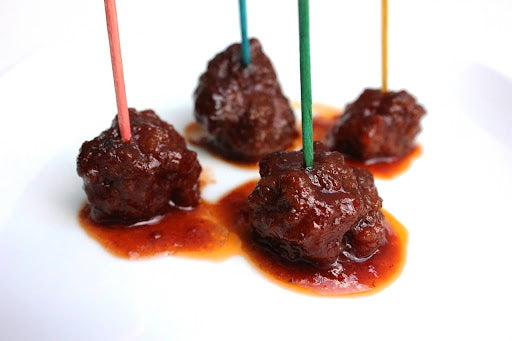
The Secret to Making Delicious Pepper Jelly Meatballs
Pepper jelly gives meatballs a sweet, tangy glaze. A successful batch starts with a complete meatball recipe, a cooking method suited to the meat and a sauce added in a controlled amount. The four choices below help you adapt a favorite recipe without treating jelly as a substitute for its structure or safe cooking instructions.
1. Choose the Meat and Keep the Recipe's Binder
Beef, pork and lamb bring different amounts of fat and flavor; chicken and turkey make another option. Use a recipe written for the meat you choose. Changing from beef to lean poultry can change moisture and texture, so do not assume that every mixture needs identical quantities or cooking time.
Keep the recipe's eggs, breadcrumbs, milk or other specified binder. Pepper jelly adds sugar, moisture and flavor; it is not a reliable one-for-one replacement for eggs or milk. If you need an egg-free or dairy-free preparation, start with a complete recipe developed for that requirement and check every ingredient's label.
2. Match the Cooking Method to the Meatballs
Pan cooking and oven baking can brown the outside. A slow cooker cooks with moist heat; it does not broil or produce the same browned crust. Follow a complete recipe for meatball size, cooking temperature, sauce quantity and appliance capacity. No method guarantees that meatballs cannot overcook.
For raw ground beef, pork or lamb, check that the center reaches 160°F. Ground chicken or turkey needs 165°F, including mixtures containing poultry. Use a food thermometer in the center of several meatballs; color and time alone are not reliable checks. See the safe minimum temperature chart.
For slow cooking, thaw raw meat safely before preparation. Commercial frozen meatballs may be raw or fully cooked: follow the package's appliance and heating directions rather than assuming the same method works for every bag. For previously cooked leftovers, reheat to 165°F on the stove, in a microwave or in an oven before transferring to a preheated slow cooker for hot holding. Our slow-cooker meal guide explains these distinctions.

3. Season the Savory Mixture First
Garlic, parsley, oregano and a little grated cheese can complement a sweet glaze. Account for salt already supplied by cheese, breadcrumbs and sauce. Mix gently and keep the mixture refrigerated until cooking. Never taste raw meat to check seasoning; cook a small sample fully before tasting if your recipe calls for a seasoning check.
4. Add Pepper Jelly as Sauce or Glaze
Warm a small measured amount of jelly with the sauce specified in your recipe, stirring until smooth. Taste a clean portion before it contacts raw meat, then add more jelly gradually. A thin coating is easier to control than a large pool of very sweet sauce. For a skillet or oven preparation, glazing later helps limit scorching; for a slow-cooker recipe, follow its liquid and timing instructions.
Keep serving sauce separate from sauce or brushes that touched raw meat. Do not return used basting sauce to a ready-to-eat bowl. Jelly mixed into a meatball mixture should be a measured flavor addition in a suitable recipe, while the original binder remains in place.
Choose a Flavor for Your Guests
Jalapeño Pepper Jelly is in Grandma Jones' medium heat group. Habanero is hot; Cranberry is mild. These are qualitative flavor categories, not measured Scoville ratings. For a mixed group, keep extra hot jelly on the side.
Serve cooked meatballs promptly or keep them hot at 140°F or above. Refrigerate leftovers in shallow containers within two hours, or one hour above 90°F; use refrigerated leftovers within three to four days. Follow USDA leftover guidance and reheating guidance. Browse the Grandma Jones' Pepper Jelly collection to compare current flavor choices.