

Pepper Jelly vs. Pepper Jam: Is There a Difference?
Pepper jelly and pepper jam are often used to describe very similar sweet-and-spicy pepper preserves, but the two terms can imply different textures.
Generally, pepper jelly is smoother and more gel-like, while pepper jam tends to be thicker and may contain more visible pieces of pepper, fruit or other ingredients.
But there is an important catch:
In everyday cooking and commercial food language, the terms are not always used consistently.
One producer may call a product pepper jam because it is chunky. Another may use "pepper jam" simply because that is the traditional name of the recipe or brand.
Grandma Jones is a perfect example.
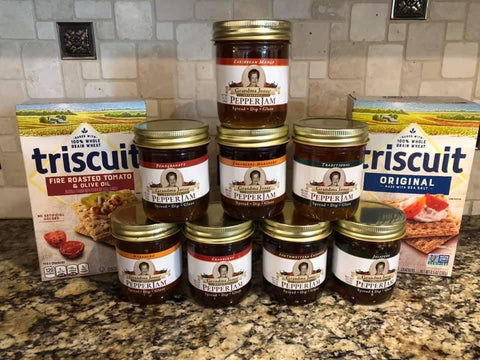
Our family recipe was historically called Pepper Jam. That name appeared on our original jars, our Pepper Jam cookbook, Pepperjam.com and our QVC debut.
Today we generally use pepper jelly as the broader category term because that is how most consumers recognize and search for this type of sweet-and-pepper preserve.
So the short answer is:
Pepper jelly and pepper jam can be different—but the label alone does not always tell you exactly what is inside the jar.
Pepper Jelly vs. Pepper Jam at a Glance
| Characteristic | Pepper Jelly | Pepper Jam |
|---|---|---|
| Typical Texture | Smooth, soft and gelled | Thicker, softer and often more textured |
| Visible Ingredients | Usually fewer or smaller pieces | May contain more obvious pepper or fruit pieces |
| Clarity | Often more translucent | Usually more opaque |
| Spreadability | Soft gel that melts easily | Thicker and more spoonable |
| Common Uses | Cheese, glazes, dips, sauces, sandwiches | Cheese, sandwiches, burgers, biscuits, spreads |
| Are the Terms Interchangeable? | Often in casual usage, yes—but texture and formulation may differ by recipe or manufacturer. | |
What Is Pepper Jelly?
Pepper jelly is a sweet-and-tangy preserve usually built around:
- Peppers
- Sugar
- Vinegar
- Pectin
The finished product generally has a soft gelled texture.
Depending on the recipe, it may be:
- Mild
- Medium
- Hot
- Fruit-forward
- Smoky
- Sweet and tangy
A traditional pepper jelly is often smoother than what many people would describe as a pepper jam, although pepper jelly can still contain visible pepper pieces.
For the category basics, see our complete guide to what pepper jelly is.
What Is Pepper Jam?
In everyday food language, pepper jam generally describes a thicker, more textured pepper preserve.
It may contain:
- Chopped peppers
- Fruit pulp
- Onions or aromatics in savory versions
- Visible seeds or pepper pieces
- A softer, less uniform gel
Think of the distinction this way:
Jelly usually emphasizes the gel.
Jam usually emphasizes the ingredients suspended within the spread.
That is a useful culinary rule of thumb—but it is not reliable enough to tell you exactly how every commercial product will look or taste.
Why Are Jelly and Jam Technically Different?
Traditional fruit jelly and fruit jam have distinct meanings in food production.
Jelly is traditionally based on fruit juice or an extract, producing a smoother gel without significant pieces of fruit.
Jam generally incorporates crushed, chopped or pulped fruit, giving it a thicker and less transparent texture.
That distinction explains why grape jelly and strawberry jam look so different even though both are sweet fruit preserves.
Pepper products complicate the terminology somewhat because peppers are low-acid ingredients and commercial pepper spreads do not necessarily fit as neatly into conventional fruit-preserve categories.
As a result, the words pepper jelly and pepper jam are sometimes used more loosely than the traditional fruit definitions would suggest.
Does Pepper Jelly Taste Different From Pepper Jam?
Not necessarily.
The biggest difference is often texture rather than flavor.
Both can combine:
- Sweetness
- Vinegar-driven acidity
- Fresh pepper flavor
- Chile heat
- Fruit
- Smoke
A jalapeño pepper jelly and jalapeño pepper jam could have nearly identical flavor profiles while differing primarily in consistency.
Conversely, two products both labeled "pepper jelly" could taste completely different if one is mild and bell-pepper-forward while the other uses habanero.
The pepper, fruit and formulation tell you more about the flavor than the single word jelly or jam.
Which Is Smoother: Pepper Jelly or Pepper Jam?
Usually pepper jelly.
A typical pepper jelly has a softer, more uniform gel structure.
Pepper jam is more likely to feel:
- Thick
- Chunky
- Pulpy
- Spoonable
However, recipes vary.
Some pepper jellies deliberately contain chopped peppers for appearance and flavor, while some commercial products called pepper jam may actually be fairly smooth.
Which Is Better for Cheese and Crackers?
Both can be excellent.
Pepper jelly is especially useful when you want the condiment to:
- Spread easily
- Melt slightly over warm cheese
- Flow over cream cheese
- Create a glossy presentation
Pepper jam can be appealing when you want:
- More texture
- Visible pepper pieces
- A thicker spoonful on crostini
- A more rustic spread
For classic cream cheese and crackers, a soft pepper jelly works exceptionally well because the gel loosens slightly as it sits over the cheese.
See our Cheese & Cracker Pairing Guide for specific combinations.
Which Is Better for Cooking?
Again, either can work.
But texture can make one more convenient for a particular technique.
Pepper Jelly Is Especially Good For:
- Glazes
- Pan sauces
- BBQ sauce
- Wing sauce
- Vinaigrettes
- Dipping sauces
The soft gel melts easily, making it simple to incorporate into another sauce.
Pepper Jam Is Especially Good For:
- Burgers
- Sandwiches
- Biscuits
- Crostini
- Cheese boards
A thicker texture can stay in place particularly well as a spread.
But there is substantial overlap.
A good pepper jelly can absolutely go on a burger, and a pepper jam can be melted into a glaze.
Can You Substitute Pepper Jam for Pepper Jelly?
For ordinary serving and cooking, usually yes.
If a recipe calls for pepper jelly as:
- A glaze
- A sandwich spread
- A cheese topping
- A sauce ingredient
- A dip ingredient
pepper jam can often be substituted.
You may simply need to adjust the consistency.
A thick pepper jam can be loosened with a small amount of:
- Water
- Stock
- Vinegar
- Citrus juice
depending on the recipe.
The flavor and heat level matter more than the name.
One Important Exception: Home Canning
Do not treat pepper jelly and pepper jam recipes as freely interchangeable when making a shelf-stable canned product.
Canning safety depends on the tested formulation, including:
- Ingredient amounts
- Acidity
- Sugar
- Pectin
- Jar size
- Processing method
- Processing time
If you're making a shelf-stable product, follow the tested recipe you selected rather than turning a jelly recipe into a jam by adding extra peppers, fruit or other low-acid ingredients.
See our Pepper Jelly Canning & Storage Guide for more.
Why Did Grandma Jones Call It Pepper Jam?
This distinction has special meaning for our family.
Grandma Jones was Marcia Jones of Forty Fort, Pennsylvania.
The family recipe she made for relatives and friends was known as Pepper Jam.
That was the name the Jones family inherited with the recipe.

When her grandsons Rick and Kris Jones began commercializing the recipe in the late 1990s, the Pepper Jam name stayed.
The original business became Pepperjam.com.
The cookbook was titled around Pepper Jam.
And when Grandma Jones appeared on QVC in 2001, the product was introduced as Grandma Jones Pepper Jam.
So for Grandma Jones, "Pepper Jam" isn't simply another generic food term.
It's part of the family history.
Why Do We Call It Pepper Jelly Today?
Because pepper jelly is the category term most consumers now recognize.
If someone is looking for the sweet-and-pepper condiment served with cream cheese, used as a meat glaze or paired with Brie, they are much more likely to describe the category as pepper jelly.
That makes "Grandma Jones' Pepper Jelly" clearer for people discovering the brand for the first time.
But we haven't abandoned the Pepper Jam heritage.
The older name still appears in:
- Our family history
- Historic packaging
- The original cookbook
- Our QVC story
- The Pepperjam.com business history
You can think of it this way:
Pepper Jelly describes the category.
Pepper Jam describes an important part of the Grandma Jones story.
Does "Pepper Jam" Mean It Contains Fruit?
No.
The word jam does not automatically mean a pepper spread contains mango, cranberry or another obvious fruit flavor.
A pepper jam can be centered primarily around peppers.
Likewise, a pepper jelly can contain fruit.
Examples include:
- Mango pepper jelly
- Cranberry pepper jelly
- Pomegranate pepper jelly
- Cranberry habanero pepper jelly
Always check the specific ingredient list or product description if you want to know what fruit is actually present.
Does "Pepper Jelly" Mean It Has No Pepper Pieces?
Not necessarily.
Traditional jelly terminology suggests a relatively smooth gel, but many pepper jellies contain small visible pepper pieces.
Those pieces can add:
- Color
- Texture
- Visual pepper identity
A product does not suddenly become pepper jam simply because you can see a few pieces of pepper suspended in the gel.
This is one reason the names should be treated as helpful descriptions rather than absolute predictors of texture.
Pepper Jelly vs. Pepper Jam vs. Fruit Jam
| Characteristic | Pepper Jelly | Pepper Jam | Fruit Jam |
|---|---|---|---|
| Main Identity | Sweet pepper preserve | Sweet pepper spread | Fruit spread |
| Typical Texture | Smooth/gelled | Thicker/more textured | Soft with fruit pulp |
| Acidity | Usually noticeable | Usually noticeable | Usually less savory |
| Chile Heat | Mild to very hot | Mild to very hot | Usually none |
| Best Uses | Cheese, glazes, meat, seafood, appetizers | Sandwiches, cheese, biscuits, meats | Toast, pastries, desserts, PB&J |
For an even broader comparison, see our Pepper Jelly vs. Jam, Preserves, Chutney & More Guide.
Which Should You Buy: Pepper Jelly or Pepper Jam?
Don't choose based on the name alone.
Instead, look at four things:
1. Texture
Do you want a soft gel or a thicker, chunkier spread?
2. Heat
Do you want mild bell-pepper flavor, moderate jalapeño heat or something much hotter like habanero?
3. Flavor
Do you prefer classic pepper flavor, tropical mango, tart cranberry, smoky chipotle or another direction?
4. How You'll Use It
For glazes and sauces, a softer jelly is convenient.
For a thick burger or sandwich spread, a jam-like texture may appeal more.
But both can overlap substantially.
Flavor and heat are usually more important than whether the front of the package says jelly or jam.
Frequently Asked Questions
Are pepper jelly and pepper jam the same thing?
They can be very similar, and the terms are often used interchangeably. Generally, pepper jelly implies a smoother gel while pepper jam implies a thicker or more textured spread. Individual recipes and commercial naming practices vary.
Which is thicker: pepper jam or pepper jelly?
Pepper jam is generally expected to be thicker and more textured, while pepper jelly is usually softer and more gelled. However, this is a rule of thumb rather than a guarantee for every product.
Is pepper jam spicy?
It can be, but it doesn't have to be. Like pepper jelly, pepper jam can range from mild bell-pepper-based spreads to much hotter versions made with jalapeño, habanero or other chiles.
Can I use pepper jam instead of pepper jelly?
Usually yes for ordinary cooking and serving. You may need to loosen a thick pepper jam slightly when using it as a glaze or sauce. Do not interchange recipes casually when home canning for shelf-stable storage.
Is pepper jam the same as chili jam?
Not necessarily. Chili jam often emphasizes chile peppers and may include ingredients such as garlic, ginger, onions or other savory aromatics. Pepper jam is a broader term and may include sweet peppers, fruit or milder flavor profiles.
Why did Grandma Jones call it Pepper Jam?
Pepper Jam was the name used for Marcia Jones' original family recipe. The name continued when Rick and Kris Jones commercialized the product, launched Pepperjam.com, produced the Pepper Jam cookbook and introduced Grandma Jones Pepper Jam on QVC.
Why is Grandma Jones called Pepper Jelly now?
Pepper jelly has become the clearer category term for consumers searching for this kind of sweet-and-pepper preserve. The Pepper Jam name remains an important part of the Grandma Jones family and brand history.
Does pepper jelly have to be completely smooth?
No. Pepper jelly can contain visible pieces of pepper while still having an overall soft, gelled texture.
Does pepper jam contain fruit?
It may, but fruit is not required simply because the word "jam" is used. Pepper jams and pepper jellies can both incorporate fruit such as mango, cranberry or pomegranate.
The Bottom Line
The easiest way to understand pepper jelly vs. pepper jam is this:
Pepper jelly usually describes a smoother, softer gel.
Pepper jam usually suggests a thicker, more textured spread.
But in real-world usage, those boundaries are blurry.
The same basic sweet-and-pepper condiment can be called jelly by one producer and jam by another.
For Grandma Jones, the distinction is also historical.
Our family's product began as Grandma Jones' Pepper Jam. That name became part of our cookbook, our original packaging, Pepperjam.com and our QVC history.
Today, pepper jelly is the broader category term we use so people immediately understand what kind of product they're discovering.
Different name. Same family heritage.
Next, learn What Pepper Jelly Is, explore What Pepper Jelly Tastes Like, or compare Pepper Jelly vs. Other Condiments.