
The Complete Guide to Pepper Jelly
Pepper jelly is a sweet, tangy pepper-based condiment that can range from completely mild to genuinely hot. It can be spread on crackers, paired with cheese, spooned over cream cheese, served with charcuterie, used as a glaze for meat or seafood, mixed into sauces and dips, or incorporated into recipes.
And although many people first discover it as a party appetizer, pepper jelly is far more versatile than that.
We've been making and selling Grandma Jones' Pepper Jelly from our family recipe since 1998. Over the years we've watched people use it on everything from Brie and crackers to chicken wings, pork, shrimp, breakfast sandwiches and barbecue.
This guide is the starting point for everything we've learned about pepper jelly: what it is, how it tastes, heat levels, peppers, flavors, pairings, recipes, canning, storage, nutrition, history and how to choose the right jar.
Start Here: The Pepper Jelly Guide
| If You Want to Learn About... | Start Here |
|---|---|
| What pepper jelly is | What Is Pepper Jelly? |
| Red pepper jelly | Red Pepper Jelly Guide |
| Hot pepper jelly | Hot Pepper Jelly Guide |
| Pepper jam | Pepper Jam Guide |
| Heat levels | Pepper Jelly Heat Guide |
| Which peppers to use | Best Peppers for Pepper Jelly |
| Ways to use pepper jelly | 101 Ways to Use Pepper Jelly |
| Food pairings | Pepper Jelly Pairings |
| Recipes | Pepper Jelly Recipes |
| Making pepper jelly | Making Pepper Jelly |
| A homemade recipe | Grandma Jones' Homemade Pepper Jelly Recipe |
| Canning and storage | Pepper Jelly Canning & Storage |
| Nutrition | Pepper Jelly Nutrition |
| Which flavor to buy | Find Your Flavor |
What Is Pepper Jelly?
Pepper jelly is a sweet-and-savory preserve made by combining peppers with ingredients that commonly include sugar, vinegar and pectin.
The flavor varies enormously depending on the peppers and other ingredients used.
Some versions are:
- Sweet and mild
- Tangy and pepper-forward
- Fruit-forward
- Smoky
- Moderately spicy
- Extremely hot
That versatility is one of the reasons the category can be confusing.
A mild red pepper jelly served with cream cheese is a very different experience from a habanero jelly used as a glaze on chicken.
For a deeper introduction, read What Is Pepper Jelly? Taste, Ingredients, Uses & Heat.
What Does Pepper Jelly Taste Like?
Most pepper jelly combines several flavor sensations at once:
Sweet + tangy + peppery + savory + sometimes spicy.
That contrast is what makes it useful with so many different foods.
Sweetness balances chile heat.
Acidity keeps the sweetness from becoming heavy.
Peppers contribute vegetal, smoky, fruity or floral flavors depending on the variety.
And the jelly texture allows those flavors to coat cheese, meat, seafood, crackers and other foods.
Is Pepper Jelly Spicy?
It can be, but it doesn't have to be.
The word “pepper” does not automatically mean hot.
Bell peppers have essentially no chile heat, while jalapeños produce noticeable heat and habaneros can be dramatically hotter.
The finished heat level also depends on how much hot pepper is used, what other ingredients are present and the formulation of the jelly.
At Grandma Jones, we group our eight flavors roughly like this for tasting purposes:
| Heat Level | Grandma Jones Flavors |
|---|---|
| Mild | Traditional, Caribbean Mango, Cranberry, Pomegranate |
| Medium | Jalapeño, Southwestern Chipotle |
| Hot | Habanero, Cranberry Habanero |
Those are practical tasting categories, not laboratory Scoville measurements of the finished products.
If heat is your main question, visit our Pepper Jelly Heat Guide.
What Peppers Are Used in Pepper Jelly?
Almost any culinary pepper can influence a pepper jelly, but each brings something different.
| Pepper | General Heat | Flavor Character |
|---|---|---|
| Bell Pepper | None | Sweet, fresh, vegetal |
| Poblano | Mild | Earthy |
| Jalapeño | Medium | Bright, green chile flavor |
| Chipotle | Medium | Smoky, earthy, savory |
| Serrano | Medium-hot | Fresh, sharp chile flavor |
| Cayenne | Hot | Direct chile heat |
| Habanero | Very hot | Fruity, floral, intense |
The hottest pepper is not automatically the best pepper.
The better question is what flavor you want the finished jelly to have.
Our Best Peppers for Pepper Jelly Guide explores the differences in much more detail.
Red Pepper Jelly vs. Hot Pepper Jelly
These terms are sometimes used interchangeably, but they describe different things.
Red pepper jelly generally describes the type or color of pepper used. A red pepper jelly can be quite mild if it relies primarily on sweet red bell peppers.
Hot pepper jelly describes heat. It normally includes chile peppers capable of producing noticeable capsaicin heat.
So a pepper jelly can be:
- Red and mild
- Red and hot
- Green and mild
- Green and hot
Explore our dedicated Red Pepper Jelly Guide and Hot Pepper Jelly Guide for more.
Pepper Jelly vs. Pepper Jam
Traditional fruit terminology generally distinguishes jelly from jam by texture and preparation. Jelly is traditionally associated with a gel made from strained juice, while jam normally contains more crushed fruit or fruit pieces.
Pepper-based preserves don't always fit neatly into those definitions.
For our family, there is also a historical reason you'll see both terms.
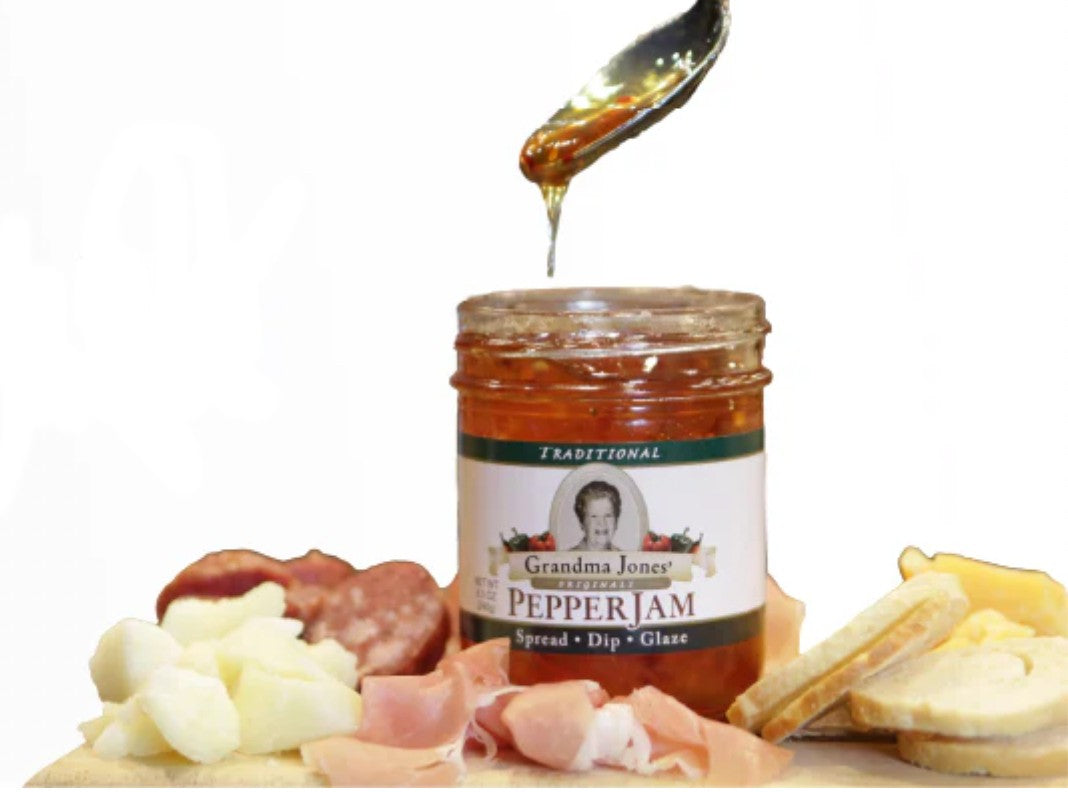
Grandma Jones called her recipe Pepper Jam.
That name became part of the product, the cookbook and even the Pepperjam.com business.
Today we commonly use pepper jelly because that's the broader category consumers recognize, while Pepper Jam remains an important part of the Grandma Jones story.
Read the complete Pepper Jam Guide.
Eight Grandma Jones Pepper Jelly Flavors
The original commercial lineup eventually grew into eight flavors, which gives us a useful real-world example of how dramatically pepper jelly changes when you change the pepper, fruit or heat level.
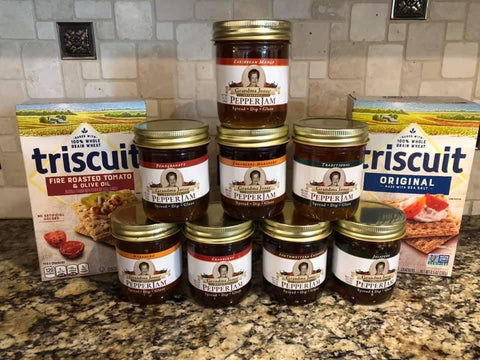
| Flavor | General Profile | Try It With |
|---|---|---|
| Traditional | Classic sweet-and-pepper flavor | Cream cheese, crackers, chicken, glazes |
| Jalapeño | Fresh pepper character with moderate heat | Cheddar, burgers, sandwiches, chicken |
| Southwestern Chipotle | Smoky and savory | Pork, beef, BBQ, smoked cheese |
| Habanero | Fruity, floral and genuinely hot | Cream cheese, chicken, wings, meats |
| Caribbean Mango | Fruit-forward and tropical | Shrimp, fish, chicken, tropical dishes |
| Cranberry | Tart and fruit-forward | Turkey, Brie, holiday boards |
| Cranberry Habanero | Tart fruit plus substantial heat | Goat cheese, turkey, pork, charcuterie |
| Pomegranate | Sweet-tart and fruit-forward | Cheese, poultry, crackers, charcuterie |
If you're not sure where to begin, use our Find Your Flavor guide or shop all eight Grandma Jones flavors.
What Is Pepper Jelly Used For?
One of the reasons pepper jelly has lasted so long in our family is that it refuses to stay in a single culinary category.
The simplest Grandma Jones description has always been:
Spread. Dip. Glaze.
Spread
Use pepper jelly on:
- Crackers
- Toast
- Biscuits
- Bagels
- Sandwiches
- Burgers
- Breakfast sandwiches
Dip
Serve it straight or combine it with:
- Cream cheese
- Goat cheese
- Brie
- Sour cream
- Other sauces
Our Pepper Jelly Dip Guide includes several easy appetizer variations.
Glaze
Warm pepper jelly and it becomes an easy base for glazing:
- Chicken
- Turkey
- Pork
- Beef
- Salmon
- Shrimp
- Meatballs
- Wings
For a much larger list, explore 101 Ways to Use Pepper Jelly.
What Cheese Goes Best With Pepper Jelly?
Cheese is one of pepper jelly's most natural partners because rich, creamy and salty flavors contrast with sweetness, acidity and chile heat.
Some of our favorite starting points include:
| Cheese | Pepper Jelly Direction |
|---|---|
| Cream Cheese | Traditional, Jalapeño, Habanero |
| Brie | Cranberry, Pomegranate, Traditional |
| Goat Cheese | Cranberry Habanero, Pomegranate |
| Sharp Cheddar | Jalapeño, Traditional |
| Smoked Cheddar | Southwestern Chipotle, Pomegranate |
| Manchego | Jalapeño, Pomegranate |
See our complete Pepper Jelly Cheese Pairing Guide or our Cheese & Cracker Pairing Guide.
What Crackers Go With Pepper Jelly?
Choose the cracker based on what else is on the bite.
Useful options include:
- Water crackers when you want the cheese and jelly to dominate
- Buttery crackers for classic cream cheese and pepper jelly
- Seeded crackers for stronger cheeses
- Multigrain crackers for savory combinations
- Flatbread crisps for charcuterie
- Pretzel crisps when you want extra salt and crunch
Visit our Pepper Jelly Cracker Pairing Guide for more.
Pepper Jelly and Charcuterie
Pepper jelly works particularly well on a charcuterie board because it connects several different elements at once:
- Salty cured meats
- Rich cheeses
- Fresh fruit
- Dried fruit
- Nuts
- Crackers and bread
A mild jelly can act as an all-purpose condiment, while a hotter or fruit-forward flavor can create a more specific pairing.
Build your board with our Pepper Jelly Charcuterie Guide.
What Meats Go With Pepper Jelly?
Pepper jelly works particularly well with meats that benefit from sweetness, acidity or a sticky glaze.
Chicken and Turkey
Try Traditional, Jalapeño, Caribbean Mango, Cranberry or Cranberry Habanero.
Pork
Pork can handle stronger sweet-and-savory combinations. Southwestern Chipotle, Cranberry Habanero, Traditional and fruit-forward varieties can all work well.
Beef
Use more savory flavors such as Southwestern Chipotle or Jalapeño on burgers, meatloaf, meatballs or grilled beef.
Explore our Pepper Jelly Meat & Poultry Pairings.
What Seafood Goes With Pepper Jelly?
Seafood tends to work best with brighter pepper jelly flavors.
Try:
- Caribbean Mango with shrimp
- Pomegranate with salmon
- Jalapeño with grilled fish
- Traditional as the base of a glaze
Visit our Pepper Jelly Seafood Pairings.
Can You Eat Pepper Jelly for Breakfast?
Absolutely.
Try it with:
- Biscuits
- Toast
- Breakfast sandwiches
- Eggs
- Sausage
- Bacon
- Bagels and cream cheese
The sweet-savory contrast makes pepper jelly especially useful when breakfast includes salty meat or rich cheese.
See our Breakfast & Brunch Pairing Guide.
Cooking With Pepper Jelly
Pepper jelly becomes even more interesting when you stop treating it only as a finished condiment.
It can become an ingredient in:
- BBQ sauce
- Wing sauce
- Meat glazes
- Seafood glazes
- Dipping sauces
- Salad dressings
- Sandwich spreads
- Meatballs
- Meatloaf glaze
- Warm appetizers
Start with our Cooking With Pepper Jelly Guide.
You can also try our Jones Family Pepper Jelly BBQ Sauce or Pepper Jelly Meatloaf Recipe.
Pepper Jelly Recipes
We've organized pepper jelly recipes around the way people actually cook:
- Appetizer Recipes
- Chicken & Turkey Recipes
- Pork & Beef Recipes
- Seafood Recipes
- Breakfast & Brunch Recipes
- Dessert Recipes
- Holiday Recipes
- Sauces, Dips & Glazes
Or browse the complete Pepper Jelly Recipe Hub.
How Is Pepper Jelly Made?
At its simplest, pepper jelly brings together peppers, sweetness, acidity and a gelling system.
But making jelly consistently requires understanding how those ingredients work together.
Pectin helps create the gel.
Sugar affects sweetness and, in conventional pectin systems, contributes to gel formation and texture.
Acid affects flavor, pectin behavior and—in a tested shelf-stable recipe—food safety.
Heat and cooking time affect concentration and the final set.
Our Science of Pepper Jelly explains why those relationships matter.
Grandma Jones' Homemade Pepper Jelly Recipe
We've preserved a version of our historical family recipe on the site.
We deliberately present it as a refrigerated homemade pepper jelly rather than claiming an old family formula is automatically a scientifically tested shelf-stable canning recipe.
That's an important distinction.
If you'd like to make it, visit Grandma Jones' Homemade Pepper Jelly Recipe.
Canning Pepper Jelly Safely
Home-canning pepper jelly requires more discipline than refrigerator jelly.
Peppers are low-acid foods, so you should not arbitrarily reduce vinegar, increase peppers, add untested ingredients or assume that any homemade recipe becomes shelf-stable simply because the jars are processed in boiling water.
For shelf-stable home preservation, use a research-tested recipe and follow its specific:
- Ingredient quantities
- Acid requirements
- Jar size
- Headspace
- Processing method
- Processing time
- Altitude adjustment
Our Pepper Jelly Canning & Storage Guide explains the distinction and links directly to research-based preservation guidance.
How Should Pepper Jelly Be Stored?
Storage depends on what kind of pepper jelly you're dealing with.
Commercial Pepper Jelly
Follow the manufacturer's storage instructions. After opening, pepper jelly is generally refrigerated according to the product label.
Properly Home-Canned Pepper Jelly
Store sealed jars according to research-based home-canning guidance and inspect jars before opening.
Refrigerator Pepper Jelly
Keep it refrigerated because it was never processed as a shelf-stable canned food.
Our Canning & Storage Guide covers seals, refrigeration, shelf life, freezing and signs that a jar should be discarded.
Pepper Jelly Nutrition
Pepper jelly nutrition varies by recipe and brand, so the nutrition label on the specific product is the best source for exact numbers.
Traditional pepper jelly is generally a sweet condiment, which means sugar and carbohydrate content can be significant even though the typical serving size is relatively small.
We do not treat pepper jelly as a miracle health food simply because it contains peppers.
Instead, think of it as what it is: a flavorful condiment that can add sweetness, acidity, pepper flavor and heat to a meal.
See our complete Pepper Jelly Nutrition Guide.
Pepper Jelly vs. Jam, Preserves and Chutney
Pepper jelly belongs to a larger family of spreads and condiments, but it isn't identical to ordinary fruit jam, preserves, marmalade or chutney.
The differences generally involve:
- Texture
- Fruit solids
- Pepper content
- Sweetness
- Acidity
- Spices
- How the condiment is used
We've broken those differences down in Pepper Jelly vs. Jam, Preserves, Chutney & More.
The Grandma Jones Pepper Jam Story
The most important thing about Grandma Jones' Pepper Jelly is that it didn't begin as a product.
It began as something our family loved.
Marcia Jones—Grandma Jones—lived on the corner of Seminary Place and Murray Street in Forty Fort, Pennsylvania.
Her home hosted countless family gatherings, holiday dinners and bridge club get-togethers.
There was always plenty of food, but one item became particularly coveted by family and friends: Grandma's limited supply of homemade Pepper Jam.
From Grandma's Kitchen to Pepperjam.com
In the late 1990s, Marcia's grandsons Richard “Rick” Jones III and Kristopher “Kris” Jones decided to bottle their grandmother's recipe and make it available beyond family and friends.
Kris focused on Internet marketing while Rick focused on product development and manufacturing.
By late 1999, Pepperjam.com was taking orders online—during the early years of consumer e-commerce.
The idea was simple:
Take something our family already knew was special and see whether people who had never met Grandma Jones would feel the same way.
The Fancy Food Show, Chef Jorge Bruce and QVC
In early 2000, Rick, Kris and their sister Jennifer attended the Fancy Food Show in New York City.
There they met QVC celebrity chef Jorge Bruce.
Jennifer insisted that Chef Jorge try Grandma Jones' Pepper Jam.
He loved it.
That encounter eventually led to a collaboration with Chef Jorge, a Pepper Jam cookbook and the opportunity to introduce Grandma Jones' Pepper Jam to a national television audience.
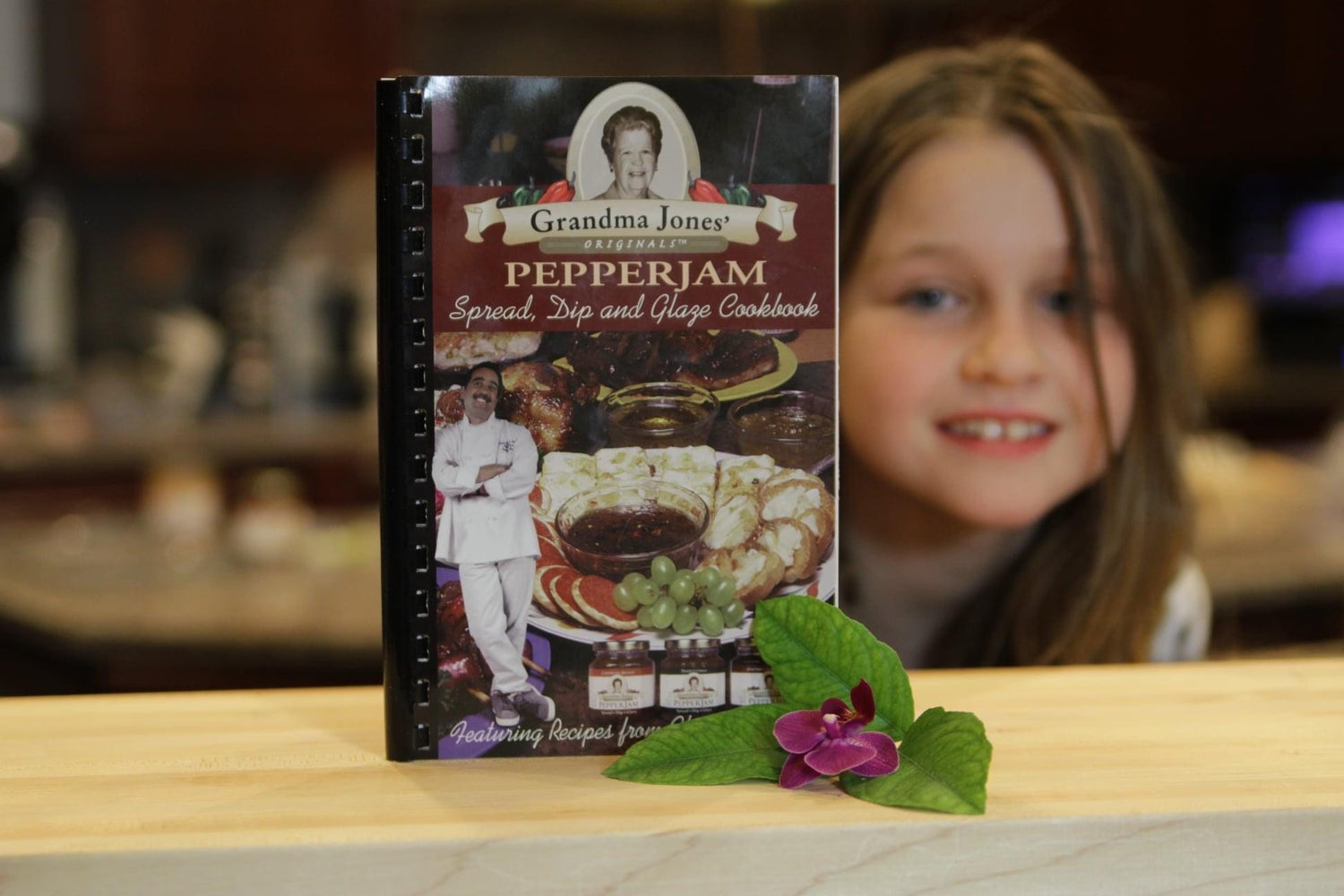
In 2001, Grandma Jones' Pepper Jam appeared on QVC's In the Kitchen with Bob.
The original assortment featured:
- Traditional
- Southwestern Chipotle
- Caribbean Mango
More than 10,000 jars sold in only a few minutes.
“Debuting Pepper Jam on QVC was surreal. It felt like we won a Super Bowl commercial. In less than 4 minutes we not only sold thousands of jars of product, but we affirmed that there is something very special about Grandma Jones Pepper Jam.”
— Kristopher Jones
That moment matters to us because the product hadn't been invented by a corporate food company or focus group.
It was Grandma's recipe.
Something made for family gatherings in Forty Fort, Pennsylvania had connected with thousands of people who had never sat at Grandma's table.
Read the full History of Pepper Jelly and Grandma Jones or visit Our Story.
How to Choose a Pepper Jelly
Instead of asking which pepper jelly is universally “best,” start with how you want to use it.
| If You Want... | Try... |
|---|---|
| A classic introduction | Traditional |
| A little more pepper heat | Jalapeño |
| Smoke and savory depth | Southwestern Chipotle |
| A tropical fruit profile | Caribbean Mango |
| Tart holiday flavor | Cranberry |
| Sweet-tart fruit | Pomegranate |
| Fruit plus substantial heat | Cranberry Habanero |
| Serious chile heat | Habanero |
Or use our Find Your Flavor guide to narrow it down.
Frequently Asked Questions About Pepper Jelly
What exactly is pepper jelly?
Pepper jelly is a sweet, tangy condiment made with peppers and ingredients that commonly include sugar, vinegar and pectin. Depending on the peppers used, it can range from mild and sweet to intensely hot.
Is pepper jelly supposed to be hot?
No. Some pepper jellies are completely mild. Heat depends primarily on the type and quantity of chile peppers used. Bell-pepper-based jelly can be very mild, while habanero jelly can be significantly hotter.
What do you eat pepper jelly with?
Popular choices include cream cheese, Brie, goat cheese, crackers, charcuterie, chicken, pork, beef, salmon, shrimp, breakfast sandwiches and biscuits. It can also be incorporated into sauces, dips, glazes and dressings.
What cheese is best with pepper jelly?
Cream cheese is the classic starting point, but Brie, goat cheese, cheddar, smoked cheddar and Manchego can all work well depending on the pepper jelly flavor.
Is red pepper jelly the same as hot pepper jelly?
No. Red pepper jelly describes the pepper color or style and can be mild. Hot pepper jelly specifically emphasizes chile heat. A red pepper jelly can therefore be either mild or hot.
What is the difference between pepper jelly and pepper jam?
Traditional jelly and jam differ in texture and preparation, but pepper preserves don't always follow those definitions perfectly. Grandma Jones historically called her family recipe Pepper Jam, while pepper jelly is the broader category name we commonly use today.
Does pepper jelly need to be refrigerated?
Storage depends on the product. Commercial jars should follow the label instructions and are generally refrigerated after opening. Refrigerator pepper jelly must remain refrigerated. Properly processed home-canned pepper jelly should follow the tested recipe's storage guidance.
Can I make pepper jelly at home?
Yes. Refrigerator pepper jelly allows more room for experimentation. If you want shelf-stable home-canned pepper jelly, use a scientifically tested recipe and follow its ingredient quantities and processing instructions.
Can you cook with pepper jelly?
Absolutely. Pepper jelly can become a glaze, dipping sauce, BBQ sauce, wing sauce, sandwich spread, meatball sauce, salad dressing or ingredient in countless other recipes.
What is the easiest way to try pepper jelly?
Spoon Traditional-style pepper jelly over a block of cream cheese and serve it with crackers. That simple combination remains one of the easiest ways to understand why sweet, tangy pepper jelly works so well with rich foods.
The Complete Picture
Pepper jelly looks simple in a jar, but there is a surprising amount happening inside it.
Change the pepper and you change the heat.
Change the fruit and you change the sweetness and acidity.
Smoke the pepper and the entire condiment becomes more savory.
Pair it with cheese and it becomes an appetizer. Warm it and it becomes a glaze. Add it to BBQ sauce and it becomes an ingredient. Put it next to charcuterie and it connects everything on the board.
That's also why Grandma Jones' Pepper Jam survived the journey from a family kitchen in Forty Fort to Pepperjam.com, a cookbook, QVC and eventually eight flavors.
It isn't just something to put on a cracker. It's a condiment you can spread, dip, glaze and cook with.
Start with Find Your Flavor, explore 101 Ways to Use Pepper Jelly, browse our Pepper Jelly Recipes, or shop all eight Grandma Jones Pepper Jelly flavors.
Sources & Further Reading
A Secret Recipe Exclusively for Family and Friends
From her home on the corner of Seminary Place and Murray Street in Forty Fort, Pennsylvania Marcia Jones (Grandma Jones) hosted countless family gatherings, holiday dinners, and bridge club get-togethers with friends. While food was always plentiful and delicious, family and friends most looked forward to gaining exclusive access to a limited supply of Marcia’s cherished family recipe of “Pepper Jam.”
Something Unique. Incredibly Special.
Pepper Jam is a unique blend of sweet, sour, and spicy that can be served traditionally alongside cheese and crackers or be used as a gourmet spread, dip, or glaze to enhance any meal. Once you buy Pepper Jam you’ll likely end up purchasing it on a regular basis just like you would ketchup, salt and pepper, or steak sauce. It’s that diverse and delicious.