
Hot Pepper Jelly: Heat, Uses, Pairings & Best Peppers

Hot pepper jelly is a sweet, tangy pepper preserve made with hot chile peppers, sugar, vinegar, and pectin. Unlike mild pepper jelly, where sweetness and fresh pepper flavor usually dominate, hot pepper jelly is designed so the chile heat becomes an unmistakable part of the experience.
That doesn't mean every hot pepper jelly tastes the same.
A jalapeño-based jelly may give you moderate, bright chile heat. Chipotle adds smoke. Serrano moves farther up the heat scale. Habanero produces a much hotter jelly while also contributing its distinctive fruity, floral pepper flavor.
At Grandma Jones' Pepper Jelly, we've been working with sweet-and-spicy pepper preserves since the late 1990s. Our own lineup ranges from mild and fruit-forward flavors all the way to Habanero and Cranberry Habanero, which are the two varieties we put firmly in our hot category.
Hot Pepper Jelly at a Glance
| Question | Short Answer |
|---|---|
| What is hot pepper jelly? | A sweet-and-tangy jelly made with one or more hot chile peppers. |
| Is hot pepper jelly very spicy? | It can range from moderately spicy to genuinely hot depending on the peppers and recipe. |
| What peppers are commonly used? | Jalapeño, serrano, cayenne, chipotle, habanero, and other hot chiles. |
| What does it taste like? | Sweet and tangy first, followed by pepper flavor and developing chile heat. |
| What is it good with? | Cheese, crackers, pork, chicken, beef, seafood, BBQ, sandwiches, and charcuterie. |
| What are Grandma Jones' hottest flavors? | Habanero and Cranberry Habanero. |
What Is Hot Pepper Jelly?
Hot pepper jelly belongs to the larger family of pepper preserves made from peppers, sugar, vinegar, and pectin.
The difference is emphasis.
In a mild pepper jelly, the pepper may contribute flavor without creating much burn.
In hot pepper jelly, chile peppers containing meaningful amounts of capsaicin are deliberately used so heat becomes part of the finished flavor profile.
The best versions still maintain balance.
You should be able to notice:
- Sweetness
- Vinegar acidity
- The actual flavor of the peppers
- Developing chile heat
- A soft, spreadable jelly texture
Hot pepper jelly shouldn't simply taste like sugar followed by pain.
The pepper itself should contribute something interesting.
What Makes Hot Pepper Jelly Hot?
The heat comes from a group of compounds called capsaicinoids. Capsaicin is the best-known of them.
Capsaicin activates sensory receptors associated with heat and irritation, which is why spicy food can feel physically hot even though the food hasn't actually raised the temperature inside your mouth.
Different chile peppers contain dramatically different amounts of capsaicinoids.
| Pepper | Typical Raw Pepper Scoville Range | General Character |
|---|---|---|
| Jalapeño | 2,500–10,000 SHU | Bright, green, moderate chile heat |
| Serrano | 10,000–25,000 SHU | Sharper, hotter chile flavor |
| Cayenne | 25,000–50,000 SHU | Direct, clean heat |
| Habanero | 100,000–350,000 SHU | Very hot, fruity and floral |
Those numbers describe the raw peppers, not the finished jelly.
A jar of pepper jelly contains sugar, vinegar, sweet peppers, fruit, liquid, and other ingredients that dilute the hot pepper. Unless a finished product has actually been laboratory tested, assigning it a precise Scoville number would create false precision.
For a deeper explanation, see our Pepper Jelly Heat Guide.
Hot Pepper Jelly vs. Regular Pepper Jelly
| Regular / Mild Pepper Jelly | Hot Pepper Jelly |
|---|---|
| Sweet pepper flavor is often dominant | Chile heat is an important part of the experience |
| May rely mostly on bell peppers | Uses jalapeño, serrano, cayenne, habanero, or other hot peppers |
| Easier introduction for heat-sensitive eaters | Better suited to people who actively enjoy spicy food |
| Often paired with mild cheeses and crackers | Can stand up to richer meats, stronger cheeses, and BBQ |
Both belong to the same basic category.
The difference is where the balance lands between sweetness and chile heat.
Hot Pepper Jelly vs. Red Pepper Jelly
These terms are sometimes confused.
Hot pepper jelly describes heat.
Red pepper jelly describes a pepper or color style.
A red pepper jelly made primarily from sweet red bell peppers can be quite mild.
A hot pepper jelly could be red, green, orange, amber, or another color depending on the peppers and other ingredients used.
See our Red Pepper Jelly Guide for the distinction in more detail.
What Does Hot Pepper Jelly Taste Like?
A good hot pepper jelly usually unfolds in stages.
You may first notice:
Sweetness → acidity → pepper flavor → developing heat.
That progression is one of the reasons hot pepper jelly is so different from ordinary hot sauce.
The sugar and gel give it body and sweetness. Vinegar adds brightness. The peppers add both aroma and capsaicin.
Depending on the chile, the finished jelly can taste:
- Fresh and vegetal
- Smoky
- Earthy
- Fruity
- Floral
- Sharp
- Deeply spicy
Which Peppers Make the Best Hot Pepper Jelly?
There isn't one objectively best pepper.
The right choice depends on whether you want brightness, smoke, fruitiness, or pure heat.
Jalapeño
Jalapeño is one of the easiest places to begin.
It provides recognizable chile heat without immediately taking the jelly into extreme territory.
Its bright green flavor works particularly well with:
- Cheddar
- Breakfast sandwiches
- Burgers
- Chicken
- Fish
Serrano
Serrano generally brings more heat than jalapeño while retaining a relatively fresh chile character.
It can work especially well when you want the jelly to feel noticeably spicy without moving all the way to habanero territory.
Chipotle
Chipotle is a smoked, ripe jalapeño.
So while its heat may remain within roughly the same general family as jalapeño, smoking completely changes its personality.
Chipotle brings:
- Smoke
- Earthiness
- Savory depth
- Moderate chile heat
It's especially useful with BBQ, pork, beef, smoked cheese, and grilled foods.
Habanero
Habanero is where hot pepper jelly becomes genuinely serious.
Raw habaneros typically fall far above jalapeños on the Scoville scale, but their appeal isn't simply heat.
Habaneros also have a distinct fruity and almost floral flavor that works surprisingly well in sweet preserves.
That's why habanero pairs naturally with fruit such as:
- Cranberry
- Mango
- Peach
- Pineapple
Grandma Jones' Hot Pepper Jelly Flavors
Within the Grandma Jones lineup, we use three practical heat groups:
- Mild: Traditional, Caribbean Mango, Cranberry, Pomegranate
- Medium: Jalapeño, Southwestern Chipotle
- Hot: Habanero, Cranberry Habanero
Those are tasting categories, not laboratory Scoville ratings for the finished jars.
Habanero Pepper Jelly
Grandma Jones' Habanero Pepper Jelly is the straightforward choice when heat itself is part of what you're looking for.
It keeps Grandma's sweet-and-spicy foundation but uses habanero to create substantially more chile intensity.
We especially like it with:
- Cheese and crackers
- Chicken tenders
- Salmon
- Fish
- Pork
- Meat and cheese boards
Cranberry Habanero Pepper Jelly
Cranberry Habanero takes the heat of habanero and adds tart cranberry.
That extra acidity and fruit character gives the jelly a different personality from straight Habanero.
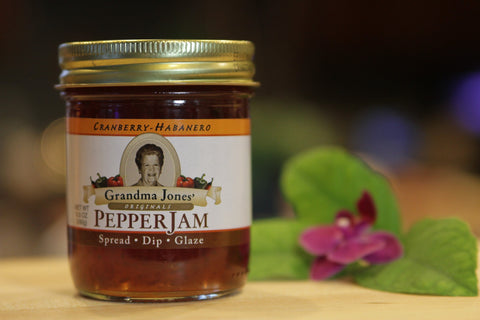
Cranberry Habanero is particularly good with:
- Goat cheese
- Brie
- Turkey
- Pork
- Holiday foods
- Charcuterie
What Cheese Goes Best With Hot Pepper Jelly?
Cheese is one of the easiest ways to balance a hot pepper jelly.
| Cheese | Why It Works |
|---|---|
| Cream Cheese | Mild richness gives the hot jelly plenty of room to stand out. |
| Brie | Buttery creaminess softens chile heat. |
| Goat Cheese | Tanginess works particularly well with fruity hot jellies. |
| Sharp Cheddar | Salt and sharpness stand up well to stronger pepper flavor. |
| Smoked Cheddar | Excellent with smoky or habanero-based jellies. |
| Manchego | Nutty, salty flavor provides a strong savory counterpoint. |
For specific combinations, visit our Pepper Jelly Cheese & Cracker Pairing Guide.
Hot Pepper Jelly With Cream Cheese
This may be the easiest spicy appetizer you can make.
- Place a block of cream cheese on a serving plate.
- Spoon hot pepper jelly over the top.
- Add crackers.
The cool, mild cream cheese helps moderate the perceived heat while allowing the pepper flavor to remain obvious.
For people trying hot pepper jelly for the first time, this is often a much easier introduction than eating a spoonful directly from the jar.
Hot Pepper Jelly With Pork
Pork is one of our favorite pairings because it has enough richness to handle both sweetness and heat.
Try hot pepper jelly with:
- Pork tenderloin
- Pork chops
- Ham
- Pulled pork
- Sausage
- BBQ ribs
Southwestern Chipotle works especially well when you want smoke, while Habanero is the better choice when you want the chile heat itself to be obvious.
Hot Pepper Jelly With Chicken
Chicken is mild enough that hot pepper jelly can become the main flavor of the dish.
Use it as:
- A glaze for grilled chicken
- A dipping sauce for chicken tenders
- A wing-sauce ingredient
- A sandwich condiment
- A finishing sauce for roasted thighs
Because pepper jelly contains sugar, apply a hot-pepper-jelly glaze later during high-heat grilling so the sugars are less likely to scorch.
Hot Pepper Jelly With Seafood
Hot pepper jelly can be surprisingly good with seafood because sweetness, acidity, and chile heat all work against mild proteins.
Try it with:
- Salmon
- Shrimp
- Scallops
- White fish
- Fish tacos
Habanero in particular can work well with seafood because of its naturally fruity character.
Hot Pepper Jelly on Sandwiches and Burgers
A little goes a long way.
Try a thin layer with:
- Turkey and Brie
- Ham and cheddar
- Roast beef
- Grilled cheese
- Chicken sandwiches
- Burgers
- Breakfast sandwiches
Rich cheese, mayonnaise, eggs, and fatty meats can all help balance stronger chile heat.
Hot Pepper Jelly BBQ Sauce
Pepper jelly is almost tailor-made for BBQ sauce because it already contributes sweetness, acidity, pepper flavor, and body.
Our Jones family BBQ sauce uses pepper jelly with Worcestershire sauce, chili sauce, dark rum, vinegar, onion, garlic, brown sugar, mustard, liquid smoke, ancho chile powder, and allspice.
For a hotter version, substitute Habanero Pepper Jelly for a milder variety.
Get the complete recipe here: Pepper Jelly BBQ Sauce Recipe.
How to Make Hot Pepper Jelly
Most hot pepper jelly recipes contain some combination of:
- Sweet peppers
- Hot peppers
- Sugar
- Vinegar
- Pectin
The sweet peppers provide body and pepper flavor without overwhelming heat.
The hot peppers determine much of the chile character.
Sugar provides sweetness and contributes to conventional gel formation, vinegar supplies acidity, and pectin gives jelly its structure.
If you're making a refrigerator jelly, you have much more room to experiment with different chile combinations.
If you're making a product intended for shelf-stable home canning, use a research-tested formulation and follow its ingredient quantities and processing instructions.
Can You Safely Can Hot Pepper Jelly?
Yes, when using a tested canning recipe.
The National Center for Home Food Preservation publishes a tested Golden Pepper Jelly formula containing sweet peppers and Serrano chiles.
Importantly, the recipe states that other hot peppers can be substituted while maintaining the specified quantities.
It also specifically warns that the vinegar quantity should not be reduced because the added vinegar helps make the low-acid peppers safe for boiling-water canning.
If shelf-stable canning is your goal, start with our Pepper Jelly Canning & Storage Guide and follow the linked tested recipe rather than improvising ingredient proportions.
Can You Make Hot Pepper Jelly Hotter?
For a refrigerator-style jelly, yes.
There are several ways to increase chile intensity:
- Use a hotter pepper variety.
- Use more hot pepper within an appropriate refrigerator recipe.
- Retain more of the pale internal pepper tissue where capsaicin is concentrated.
But hotter isn't always better.
Heat can eventually overwhelm the fruit, vinegar, pepper flavor, and food you're pairing with the jelly.
For shelf-stable canning, don't freely increase the amount of peppers in a tested recipe. Follow only substitutions and quantities specifically allowed by that formulation.
Are the Seeds the Hottest Part of a Pepper?
Not exactly.
Much of a chile pepper's capsaicin is concentrated in the pale internal tissue that supports and surrounds the seeds.
The seeds can become coated with capsaicin because they sit against that tissue, which is why removing the seeds and internal membrane together often reduces perceived heat.
Wear gloves when working with very hot peppers and avoid touching your eyes or face.
What Can You Substitute for Hot Pepper Jelly?
| If You're Using It For... | Possible Substitute |
|---|---|
| Cheese and crackers | Mild pepper jelly plus hot sauce, spicy fruit preserve, or chutney |
| Meat glaze | Hot honey, sweet chili sauce, or fruit preserves mixed with chile and vinegar |
| BBQ sauce | Mild pepper jelly plus hot sauce or chile paste |
| Sandwiches | Hot honey, chile jam, spicy chutney, or another pepper jelly |
For a broader comparison, see Pepper Jelly vs. Jam, Preserves, Chutney & More.
What Is the Best Hot Pepper Jelly for Beginners?
If you're used to mild foods, we would not begin with the hottest jar available.
Start with something in the medium range such as Jalapeño Pepper Jelly.
If you already enjoy genuinely spicy food, Habanero Pepper Jelly gives you a much clearer hot-pepper experience.
If you want substantial heat with more fruit character, Cranberry Habanero is the natural direction.
Frequently Asked Questions About Hot Pepper Jelly
How hot is hot pepper jelly?
There is no universal heat level. It depends on the types and quantities of hot peppers used. Jalapeño-based jelly may be moderately spicy, while habanero-based jelly can be substantially hotter.
Is hot pepper jelly hotter than jalapeño jelly?
Not necessarily, because “hot pepper jelly” is a broad category. However, versions using peppers such as habanero will usually have the potential for considerably more heat than a typical jalapeño-based jelly.
What is the hottest Grandma Jones Pepper Jelly?
We place Habanero and Cranberry Habanero in our hottest category. Jalapeño and Southwestern Chipotle fall into our medium group.
What cheese goes with hot pepper jelly?
Cream cheese, Brie, goat cheese, sharp cheddar, Manchego, and smoked cheeses all work well. Creamy cheeses are particularly useful because their richness balances stronger chile heat.
What meats go with hot pepper jelly?
Pork, chicken, beef, turkey, ham, and sausage all work well. Hot pepper jelly can also be excellent with salmon, shrimp, and other seafood.
Can hot pepper jelly be used as a glaze?
Yes. Warm it slightly and brush it onto meat toward the later stages of cooking. Because it contains substantial sugar, prolonged exposure to very high heat can cause scorching.
Does sugar remove the heat from hot pepper jelly?
No. Sugar doesn't remove capsaicin, although sweetness can change the way chile heat is perceived and make the overall flavor feel more balanced.
Can I make hot pepper jelly with habaneros?
Yes. Habaneros work particularly well in sweet preserves because they contribute both substantial heat and a naturally fruity pepper flavor. For shelf-stable canning, use a tested recipe that permits the substitution.
Does hot pepper jelly need to be refrigerated?
Commercial products should be stored according to their labels. Properly processed home-canned jelly can remain pantry-stable while sealed, but should be refrigerated once opened. Refrigerator-style homemade hot pepper jelly should remain refrigerated.
Finding Your Sweet Spot
The best hot pepper jelly isn't automatically the hottest one.
The real goal is finding the point where sweetness, acidity, pepper flavor, and chile heat all remain noticeable.
That's why changing from jalapeño to chipotle to habanero creates much more than a simple increase in temperature.
Each pepper changes the personality of the jelly.
At Grandma Jones, that spectrum ultimately gave us Jalapeño, smoky Southwestern Chipotle, fiery Habanero, and tart-hot Cranberry Habanero alongside our milder varieties.
If you're ready for genuine heat, start with Grandma Jones' Habanero Pepper Jelly. If you want to compare the complete lineup first, use our Find Your Flavor guide or shop all eight flavors.
Sources
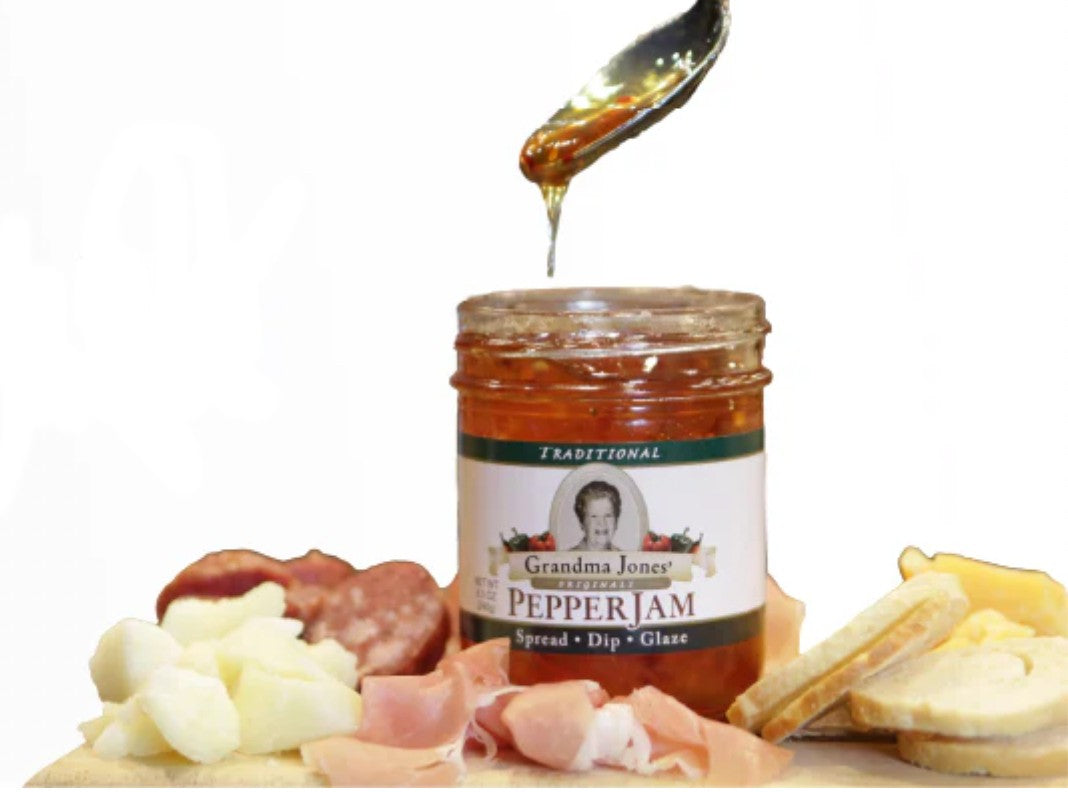
A Secret Recipe Exclusively for Family and Friends
From her home on the corner of Seminary Place and Murray Street in Forty Fort, Pennsylvania Marcia Jones (Grandma Jones) hosted countless family gatherings, holiday dinners, and bridge club get-togethers with friends. While food was always plentiful and delicious, family and friends most looked forward to gaining exclusive access to a limited supply of Marcia’s cherished family recipe of “Pepper Jam.”
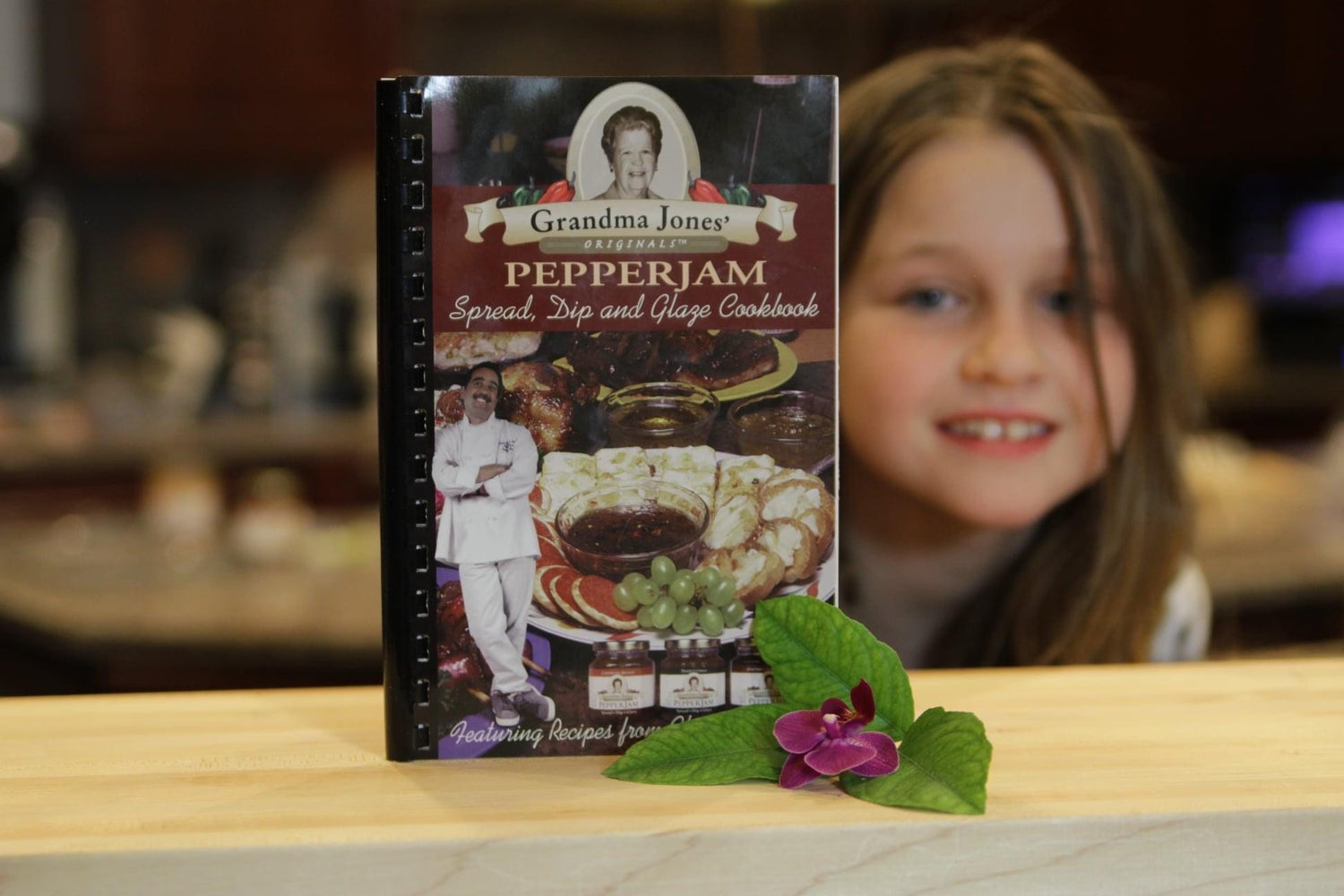
Something Unique. Incredibly Special.
Pepper Jam is a unique blend of sweet, sour, and spicy that can be served traditionally alongside cheese and crackers or be used as a gourmet spread, dip, or glaze to enhance any meal. Once you buy Pepper Jam you’ll likely end up purchasing it on a regular basis just like you would ketchup, salt and pepper, or steak sauce. It’s that diverse and delicious.