
Red Pepper Jelly: Taste, Uses, Pairings & Recipe Guide

Red pepper jelly is a sweet, tangy pepper preserve typically made with red bell peppers, sugar, vinegar, pectin, and sometimes hotter red chile peppers. Despite its bright red color, red pepper jelly does not have to be very spicy. A version based primarily on sweet red bell peppers can be mild, while recipes containing jalapeño, serrano, cayenne, habanero, or other hot peppers can deliver considerably more heat.
Its balance of sweetness, acidity, pepper flavor, and soft jelly texture makes red pepper jelly unusually versatile. It can be served with cream cheese and crackers, paired with Brie or cheddar, spread on sandwiches, used as a glaze for chicken or pork, stirred into sauces, or spooned onto a charcuterie board.
At Grandma Jones' Pepper Jelly, we've been working with sweet-and-spicy pepper preserves since the late 1990s. So this guide isn't just about defining red pepper jelly. We'll show you how it tastes, how it differs from other pepper jellies, what to pair with it, how to cook with it, and what to know if you want to make your own.
Red Pepper Jelly at a Glance
| Question | Short Answer |
|---|---|
| What is red pepper jelly? | A sweet-and-tangy jelly made primarily from red peppers, sugar, vinegar, and pectin. |
| Is red pepper jelly hot? | Not necessarily. Red bell peppers are sweet and mild; heat depends on whether hotter chile peppers are added. |
| What does it taste like? | Sweet first, followed by tangy vinegar, ripe pepper flavor, and possibly chile heat. |
| What is it used for? | Cheese, crackers, sandwiches, charcuterie, meat glazes, seafood, sauces, dips, and appetizers. |
| What cheese goes with it? | Cream cheese, Brie, goat cheese, cheddar, Manchego, and smoked cheeses are all good options. |
| Can you make it at home? | Yes. Refrigerator versions allow more experimentation; shelf-stable canning should use a tested recipe. |
What Is Red Pepper Jelly?
Red pepper jelly belongs to the broader family of pepper jellies: preserves that combine peppers with sugar, vinegar, and pectin.
The defining feature is the use of red peppers.
Many recipes rely heavily on ripe red bell peppers because they provide:
- Bright red color
- Sweet pepper flavor
- Very little chile heat
- A natural partner for vinegar and sugar
Hotter red peppers can then be added to change the heat level.
That means two jars labeled “red pepper jelly” can taste dramatically different. One might be almost entirely sweet and tangy. Another could contain enough hot chile pepper to deliver a noticeable burn.
For the broader category, read our What Is Pepper Jelly? guide.
What Does Red Pepper Jelly Taste Like?
The classic flavor profile is a combination of:
Sweet + tangy + peppery + optionally spicy.
Sugar provides the initial sweetness. Vinegar cuts through that sweetness with acidity. Red peppers contribute their own vegetable sweetness and pepper flavor. Hot peppers, when used, add a second sensation through capsaicin.
Red bell peppers tend to taste sweeter than green bell peppers because many bell pepper varieties become sweeter as they fully ripen and develop their mature color.
That's one reason red pepper jelly often tastes particularly smooth and approachable even when it contains some chile heat.
Is Red Pepper Jelly Spicy?
Color does not tell you how hot a pepper jelly will be.
Red bell peppers themselves are sweet peppers and do not provide the type of chile heat associated with jalapeño or habanero.
The heat comes from the additional peppers used in the recipe.
| Style | Likely Flavor | General Heat |
|---|---|---|
| Red bell pepper jelly | Sweet, tangy, ripe pepper flavor | Mild |
| Red pepper + jalapeño | Sweet with brighter chile flavor | Mild to medium |
| Red pepper + serrano | Sharper chile character | Medium |
| Red pepper + cayenne | Sweet with more direct chile heat | Medium to hot |
| Red pepper + habanero | Sweet, fruity and substantially hotter | Hot |
If heat level is your main concern, see our Pepper Jelly Heat Guide.
Red Pepper Jelly vs. Green Pepper Jelly
The difference is about more than appearance.
Bell peppers are frequently harvested while still green. When appropriate varieties are allowed to mature fully, they can ripen to red, yellow, orange, or other colors.
Red ripe bell peppers generally develop a sweeter flavor than peppers harvested at the green stage.
| Red Pepper Jelly | Green Pepper Jelly |
|---|---|
| Often sweeter pepper flavor | Often fresher, more vegetal pepper flavor |
| Bright red color | Green color |
| Commonly based on ripe red bell pepper | Commonly based on green bell pepper or green chiles |
| Heat depends on added chile peppers | Heat also depends on added chile peppers |
Neither one is inherently better. They simply emphasize different pepper flavors.
Red Pepper Jelly vs. Hot Pepper Jelly
These terms overlap, but they aren't identical.
Red pepper jelly describes the peppers or color profile.
Hot pepper jelly describes the heat profile.
A red pepper jelly made mostly from sweet red bell peppers can be quite mild.
A hot pepper jelly may be red, green, amber, orange, or another color depending on the peppers and other ingredients used.
So if you're shopping for heat, don't assume that a red jar is a hot jar. Look at the actual pepper varieties and the producer's heat description.
What Is Red Pepper Jelly Used For?
This is where red pepper jelly becomes much more interesting than an ordinary fruit jelly.
It can work as:
- An appetizer topping
- A cheese accompaniment
- A sandwich spread
- A meat glaze
- A seafood glaze
- A dipping-sauce ingredient
- A BBQ sauce ingredient
- A charcuterie condiment
- A breakfast spread
- A finishing sauce
We've spent decades finding new uses for pepper jelly in the Jones household. If you want to go far beyond the basics, see 101 Ways to Use Pepper Jelly.
The Classic: Red Pepper Jelly With Cream Cheese
If you've never eaten pepper jelly before, this is probably the place to start.
Put a block of cream cheese on a plate.
Spoon pepper jelly over the top.
Add crackers.
That's it.
The combination works because each part does something different:
- Cream cheese is cool, rich, mild, and creamy.
- Red pepper jelly is sweet, acidic, peppery, and possibly spicy.
- Crackers add salt and crunch.
It's one of the simplest appetizers you can make, but the contrast between the ingredients makes it feel much more interesting than the effort required.
Best Cheese With Red Pepper Jelly
Cream cheese is the classic, but it is far from the only option.
| Cheese | Why It Works |
|---|---|
| Cream Cheese | Mild richness softens the sweetness and any chile heat. |
| Brie | Buttery, creamy cheese pairs beautifully with sweet pepper acidity. |
| Goat Cheese | Tangy cheese contrasts with the jelly's sweetness. |
| Sharp Cheddar | Salt and sharpness stand up well to sweet pepper flavor. |
| Manchego | Nutty, firm cheese gives the pairing more savory depth. |
| Smoked Cheese | Smoke adds another savory dimension to the sweet-and-tangy jelly. |
For a deeper breakdown, use our Pepper Jelly Cheese & Cracker Pairing Guide.
Best Crackers With Red Pepper Jelly
You generally don't need a heavily flavored cracker.
Good choices include:
- Buttery round crackers
- Water crackers
- Wheat crackers
- Multigrain crackers
- Thin flatbreads
- Seeded crackers
If the jelly and cheese are both strongly flavored, a relatively neutral cracker usually lets the pairing work better.
Red Pepper Jelly on a Charcuterie Board
Red pepper jelly is particularly useful on a charcuterie board because it can connect sweet and savory ingredients.
Try it with:
- Brie
- Sharp cheddar
- Goat cheese
- Manchego
- Salami
- Prosciutto
- Smoked meats
- Crackers
- Apples or pears
- Grapes
- Roasted nuts
A small bowl of pepper jelly also gives guests control over how much sweetness and heat they add to each bite.
Red Pepper Jelly With Chicken
Chicken is one of the easiest proteins to pair with pepper jelly because its mild flavor gives the jelly room to stand out.
Warm the jelly slightly and combine it with ingredients such as:
- Dijon mustard
- Soy sauce
- Garlic
- Lime juice
- BBQ sauce
- Olive oil
It can then be used as a finishing glaze for chicken breasts, thighs, drumsticks, or wings.
Because pepper jelly contains significant sugar, apply sugary glazes later in high-heat cooking rather than exposing them to intense heat for the entire cook time.
Red Pepper Jelly With Pork
Pork and pepper jelly are a particularly natural combination.
The sweetness works with pork's richness, while vinegar and peppers keep the finished dish from becoming overly sweet.
Use pepper jelly with:
- Pork tenderloin
- Pork chops
- Ham
- Pulled pork
- Pork sliders
- Sausage
Smoky or hotter pepper jellies can take the combination even further.
Red Pepper Jelly With Beef
Red pepper jelly can work surprisingly well with beef when used as part of a larger sauce or glaze.
One of our favorite examples is meatloaf.
Traditional meatloaf already uses a sweet-and-acidic tomato glaze, so pepper jelly fits naturally into the same flavor structure.
Try our Pepper Jelly Meatloaf Recipe to see how we use pepper jelly in a classic comfort-food dish.
Red Pepper Jelly With Seafood
Sweet-and-spicy pepper flavors also work well with mild seafood.
Consider it with:
- Salmon
- Shrimp
- Scallops
- White fish
- Fish tacos
A fruit-forward or moderately spicy jelly is often particularly effective because seafood can handle sweetness without requiring a heavy sauce.
Red Pepper Jelly BBQ Sauce
Pepper jelly is a useful shortcut for building BBQ sauce because it already brings sweetness, acidity, pepper flavor, and body.
We've been using it that way in the Jones family for years.
Our family BBQ sauce combines pepper jelly with Worcestershire sauce, chili sauce, dark rum, vinegar, onion, garlic, brown sugar, mustard, liquid smoke, ancho chile powder, and allspice.
You can get the complete formula in our Pepper Jelly BBQ Sauce Recipe.
Can You Put Red Pepper Jelly on a Sandwich?
Absolutely.
A thin layer works particularly well on sandwiches that already have salty, creamy, smoky, or rich ingredients.
Try it with:
- Turkey and Brie
- Ham and cheddar
- Roast beef and sharp cheese
- Grilled cheese
- Chicken sandwiches
- Breakfast sandwiches
- Burgers
The key is usually restraint. You want enough jelly to create contrast without turning the sandwich into dessert.
How Is Red Pepper Jelly Made?
Most traditional red pepper jelly formulas use some combination of:
- Red bell peppers
- Optional hot peppers
- Sugar
- Vinegar
- Pectin
The peppers supply flavor and color. Sugar supplies sweetness and contributes to the structure of conventional jelly. Vinegar provides acidity and tang. Pectin creates the gel.
If you're making pepper jelly simply for refrigerated use, there is much more freedom to experiment.
If you're making jelly for shelf-stable home canning, ingredient proportions and processing instructions matter for food safety.
How to Make Red Pepper Jelly Safely for Canning
The National Center for Home Food Preservation publishes a laboratory-developed Golden Pepper Jelly recipe that is useful here because its instructions specifically state that other colors of sweet peppers can be substituted for the yellow peppers.
That means red sweet peppers can be used to produce a red version while keeping the tested recipe's quantities and processing requirements intact.
The tested formula also allows other hot peppers to be substituted for the Serrano peppers.
What should not be changed casually is the vinegar quantity. The National Center specifically notes that the added vinegar makes the low-acid peppers safe for boiling-water canning and says not to reduce it.
If you want a shelf-stable red pepper jelly, follow the NCHFP tested Golden Pepper Jelly recipe and its altitude-specific processing instructions rather than improvising a canning formula.
Want a Homemade Refrigerator Pepper Jelly Instead?
If you're not trying to produce a shelf-stable canned product, we've published the Grandma Jones family-style homemade version here:
Grandma Jones' Homemade Pepper Jelly Recipe
That page is intentionally presented as a refrigerated recipe rather than as an unverified shelf-stable canning formula.
Can You Make Red Pepper Jelly Without Pectin?
Recipes exist that rely on extended cooking or other gelling approaches, but pectin is extremely common in traditional pepper jelly because peppers themselves do not naturally provide the same jelly-forming characteristics as high-pectin fruits.
If you're following a recipe that calls for commercial pectin, use the type specified by that recipe. Liquid pectin, powdered pectin, and low-sugar pectin systems do not necessarily behave the same way.
Can You Make Red Pepper Jelly With Less Sugar?
Yes, but don't simply cut the sugar from a conventional recipe and expect the same result.
Traditional pectin formulations rely on the relationship among sugar, acid, pectin, and liquid.
Low- and no-sugar pectins are designed to gel under different conditions.
If reduced sugar is your goal, read our Sugar-Free Pepper Jelly Guide.
What Can I Substitute for Red Pepper Jelly?
The best substitute depends on how you're using it.
| Use | Possible Substitute |
|---|---|
| Cheese and crackers | Another mild pepper jelly, fruit preserve with chile, or chutney |
| Meat glaze | Another pepper jelly, hot honey, fruit preserve mixed with vinegar and chile, or sweet chili sauce |
| Charcuterie | Chutney, fig spread, fruit preserves, or another pepper jelly |
| Sandwiches | Hot honey, chutney, spicy fruit spread, or another pepper jelly |
For a deeper comparison, see Pepper Jelly vs. Jam, Preserves, Chutney & More.
Where Does Grandma Jones Fit?
We want to be precise here because product names matter.
Grandma Jones does not currently sell a flavor literally named “Red Pepper Jelly.”
Our Traditional Pepper Jelly occupies many of the same classic use cases—cheese and crackers, sandwiches, glazes, sauces, and appetizers—but our published family recipe for Traditional uses green bell pepper and red pepper flakes.
So we're not going to relabel Traditional as red pepper jelly simply to capture a search term.
What we can offer is eight different interpretations of the broader pepper-jelly category:
- Traditional
- Jalapeño
- Southwestern Chipotle
- Habanero
- Caribbean Mango
- Cranberry
- Cranberry Habanero
- Pomegranate
If you're looking for a mild, classic pepper-jelly experience, Traditional is the natural place to begin.
If you want more heat, Jalapeño, Habanero, or Cranberry Habanero take things further. Southwestern Chipotle adds smoke rather than simply chasing heat.
Find Your Flavor or shop all eight Grandma Jones' Pepper Jelly varieties.
Frequently Asked Questions About Red Pepper Jelly
Is red pepper jelly sweet or spicy?
Usually both, but the balance varies. Red bell pepper jelly can be quite mild and sweet, while recipes containing hotter chile peppers can become substantially spicier.
What peppers are used in red pepper jelly?
Red bell peppers are common because of their sweetness, color, and mild flavor. Recipes may also contain jalapeño, Serrano, cayenne, habanero, or other chile peppers to increase heat.
Is red pepper jelly the same as hot pepper jelly?
No. Red pepper jelly describes a style based on red peppers or a red color profile. Hot pepper jelly describes heat. A red pepper jelly can be mild, and a hot pepper jelly doesn't have to be red.
What cheese is best with red pepper jelly?
Cream cheese is the classic choice. Brie, goat cheese, sharp cheddar, Manchego, and smoked cheeses are also excellent partners.
What meat goes with red pepper jelly?
Chicken and pork are especially easy pairings, but red pepper jelly can also work with turkey, beef, ham, sausage, and seafood.
Does red pepper jelly need to be refrigerated?
Commercial products should be stored according to the manufacturer's label. Properly processed home-canned pepper jelly can remain shelf stable while sealed, but should be refrigerated after opening. Refrigerator-style homemade jelly should remain refrigerated.
Can I use red bell peppers in a tested pepper jelly canning recipe?
The National Center for Home Food Preservation's tested Golden Pepper Jelly recipe specifically allows other colors of sweet peppers to replace the yellow peppers. Keep the tested ingredient quantities and processing instructions intact, particularly the specified vinegar.
What is the easiest way to eat red pepper jelly?
Spoon it over cream cheese and serve it with crackers. It's fast, requires no cooking, and gives you an immediate sense of how sweetness, acidity, pepper flavor, and heat work together.
Red Pepper Jelly Is Just the Beginning
Red pepper jelly is one of the classic gateways into the much larger pepper-jelly category.
Once you understand the basic formula—sweetness, vinegar, pepper flavor, heat, and a soft gel—the number of possible variations becomes enormous.
That's something our family discovered firsthand.
Grandma Jones started with Pepper Jam made for family and friends. Over time, that family recipe grew into varieties built around jalapeño, chipotle, habanero, mango, cranberry, and pomegranate.
Different peppers don't just change the heat. They change what the jelly works with, how it tastes, and where it belongs on the table.
That's the real appeal of pepper jelly: one basic idea can become dozens of completely different eating experiences.
Continue with our Complete Pepper Jelly Guide, explore 101 Ways to Use Pepper Jelly, or shop all eight Grandma Jones flavors.
Sources
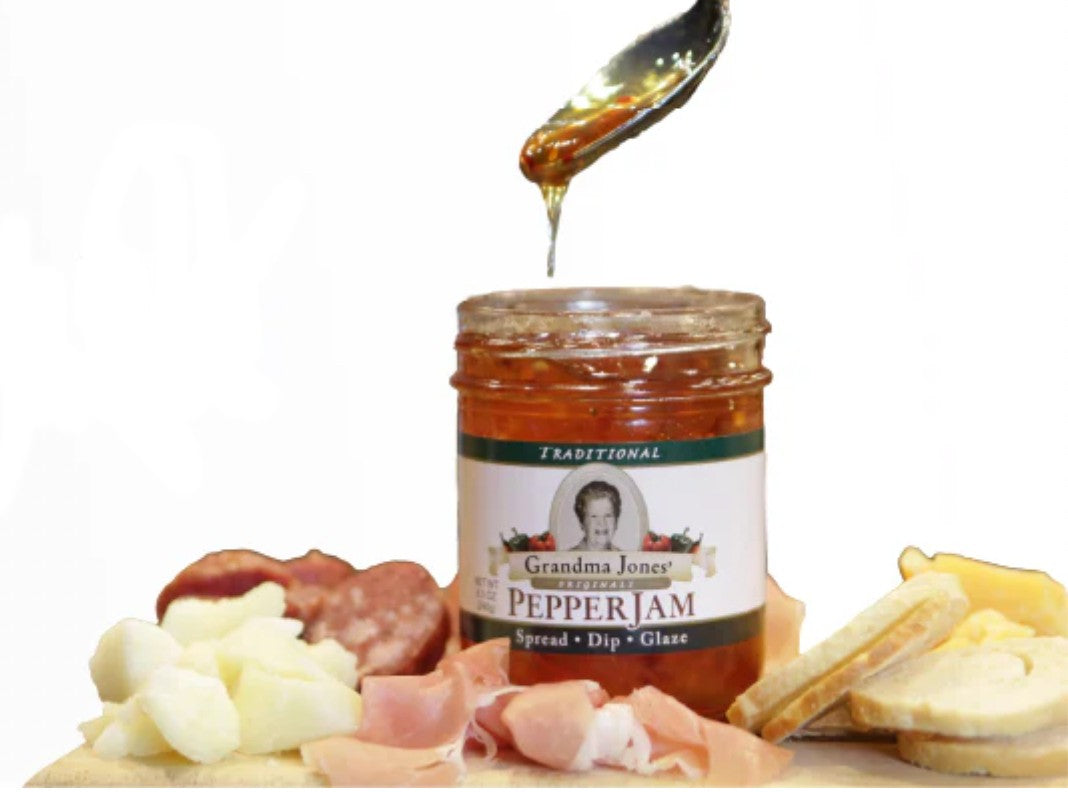
A Secret Recipe Exclusively for Family and Friends
From her home on the corner of Seminary Place and Murray Street in Forty Fort, Pennsylvania Marcia Jones (Grandma Jones) hosted countless family gatherings, holiday dinners, and bridge club get-togethers with friends. While food was always plentiful and delicious, family and friends most looked forward to gaining exclusive access to a limited supply of Marcia’s cherished family recipe of “Pepper Jam.”
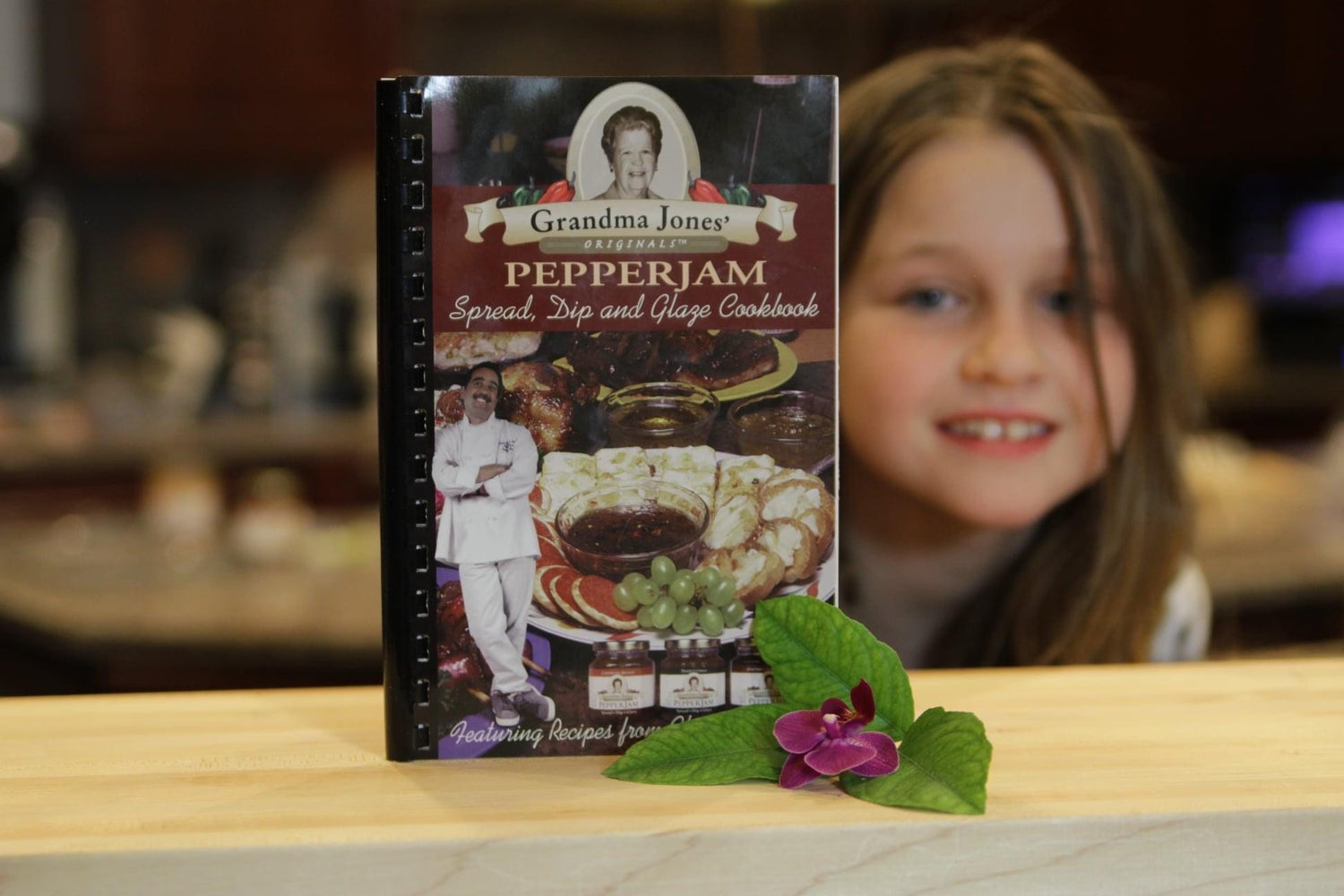
Something Unique. Incredibly Special.
Pepper Jam is a unique blend of sweet, sour, and spicy that can be served traditionally alongside cheese and crackers or be used as a gourmet spread, dip, or glaze to enhance any meal. Once you buy Pepper Jam you’ll likely end up purchasing it on a regular basis just like you would ketchup, salt and pepper, or steak sauce. It’s that diverse and delicious.